Is Bitget legal in US: access, risks, and limits for Americans
The question “can you use Bitget from the United States?” isn’t about how slick the app feels – it’s about compliance. Crypto exchanges have to consider sanctions lists, AML/KYC requirements, and local rules around derivatives, margin trading, and customer funds.


Bitget’s official availability for users located in the U.S. is limited. In practice, that can mean geo-blocking, verification hurdles, and certain features being unavailable even if you manage to create an account.
To make sense of this, it helps to understand what Bitget is as a product – and why the U.S. is still one of the toughest markets for global exchanges.
What Bitget is: core features for crypto trading
Bitget is a crypto platform commonly associated with futures trading, derivatives, and an ecosystem of tools for active traders. When people search for Bitget in USA, they usually want to know one thing: can they simply buy/sell crypto and withdraw funds, or is access blocked altogether?
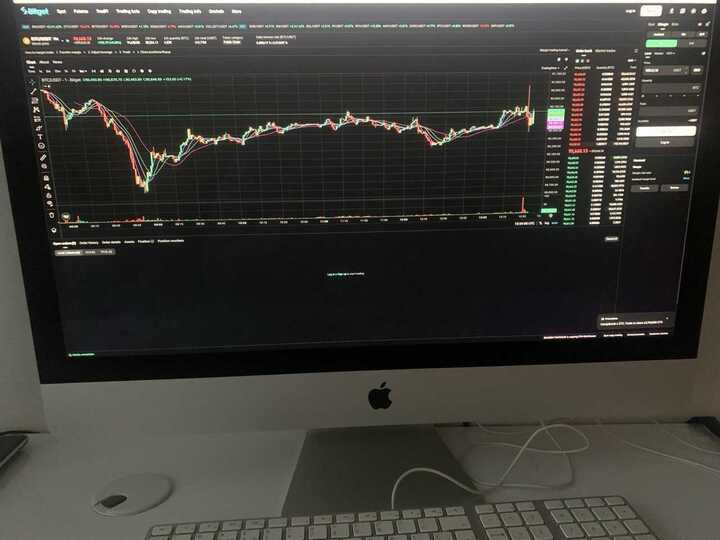
In its global version, Bitget typically offers a broad set of features, including:
- spot trading with limit/market orders and an order book;
- basic risk controls (stop orders and order types in the terminal);
- quick conversions and simple swaps for smaller amounts;
- futures and margin products (depending on the region);
- copy trading and trading bots (with restrictions in certain markets);
- crypto deposits/withdrawals and network selection (fees, confirmations, supported chains).
Important: even if a platform offers a full toolkit globally, what you can actually use depends on your country, your verification status, and the service rules that apply to your region.
Why U.S. access may be limited: regulation and KYC
To answer does Bitget work in USA, you have to look at regulations. The U.S. has strict requirements for registering and licensing financial services, plus evolving (and not always consistent) rules around crypto derivatives and margin trading.
Restrictions for U.S. users typically appear for a few reasons:
- Compliance and sanctions requirements. Exchanges may be required to restrict access for residents/citizens of certain countries and territories, and to comply with sanctions and financial monitoring rules.
- AML/KYC and source-of-funds checks. Many platforms require identity verification for full functionality. If your country is treated as a “restricted” region, KYC may be unavailable and parts of the service can be blocked.
- Derivatives rules. In the U.S., crypto derivatives are generally regulated more strictly than spot trading, so global exchanges often either launch separate U.S.-specific products or don’t serve U.S. users at all.
In other words, these limitations are usually about lowering legal risk, avoiding penalties, and meeting compliance requirements.
What U.S. users can and can’t do on Bitget
A key question from American traders is: “can i use Bitget in the US?”
Here are the issues they most commonly run into:
- Sign-up and login. U.S. users may hit restrictions during registration or even when trying to access an existing account (geo-blocking, service not offered to residents).
- Identity verification (KYC). If you provide a U.S. address or U.S. documents, KYC may be unavailable. Without full verification, limits, funding methods, and trading functionality are usually reduced.
- Spot trading. Even if the interface loads, access to spot markets can be limited (fully or partially). In some cases, you may be able to view markets but not place orders.
- Derivatives and margin. These products are commonly restricted in “high-compliance” jurisdictions. For the U.S., the risk of limitations is typically higher than for spot.
- Funding and withdrawals. Fiat methods (cards/bank transfers) tend to be the most sensitive. Crypto deposits/withdrawals are only possible if your account is allowed to operate and withdrawals aren’t restricted by policy.
- Account holds and freezes. If the platform detects a mismatch with regional rules (for example, identifying a U.S. location by IP), it may pause activity, request extra checks, or temporarily lock withdrawals while it reviews the case.
Your exact experience depends on where you are physically located, the documents you provide, and the rules the platform enforces when you sign up.
The takeaway is simple: if you’re in the U.S. or a U.S. resident, treat Bitget as a higher-risk option in terms of sudden restrictions. Trying to “work around” regional rules (for example, hiding your location) can lead to account limitations and issues accessing your funds.
A more predictable approach is to use a platform that officially operates in the U.S. and aligns with local requirements. That way, you reduce the risk of unexpected restrictions and get a more reliable user experience.
The material on GNcrypto is intended solely for informational use and must not be regarded as financial advice. We make every effort to keep the content accurate and current, but we cannot warrant its precision, completeness, or reliability. GNcrypto does not take responsibility for any mistakes, omissions, or financial losses resulting from reliance on this information. Any actions you take based on this content are done at your own risk. Always conduct independent research and seek guidance from a qualified specialist. For further details, please review our Terms, Privacy Policy and Disclaimers.
Articles by this author