Bitcoin sinks as leverage, ETF hedging and miner stress collide
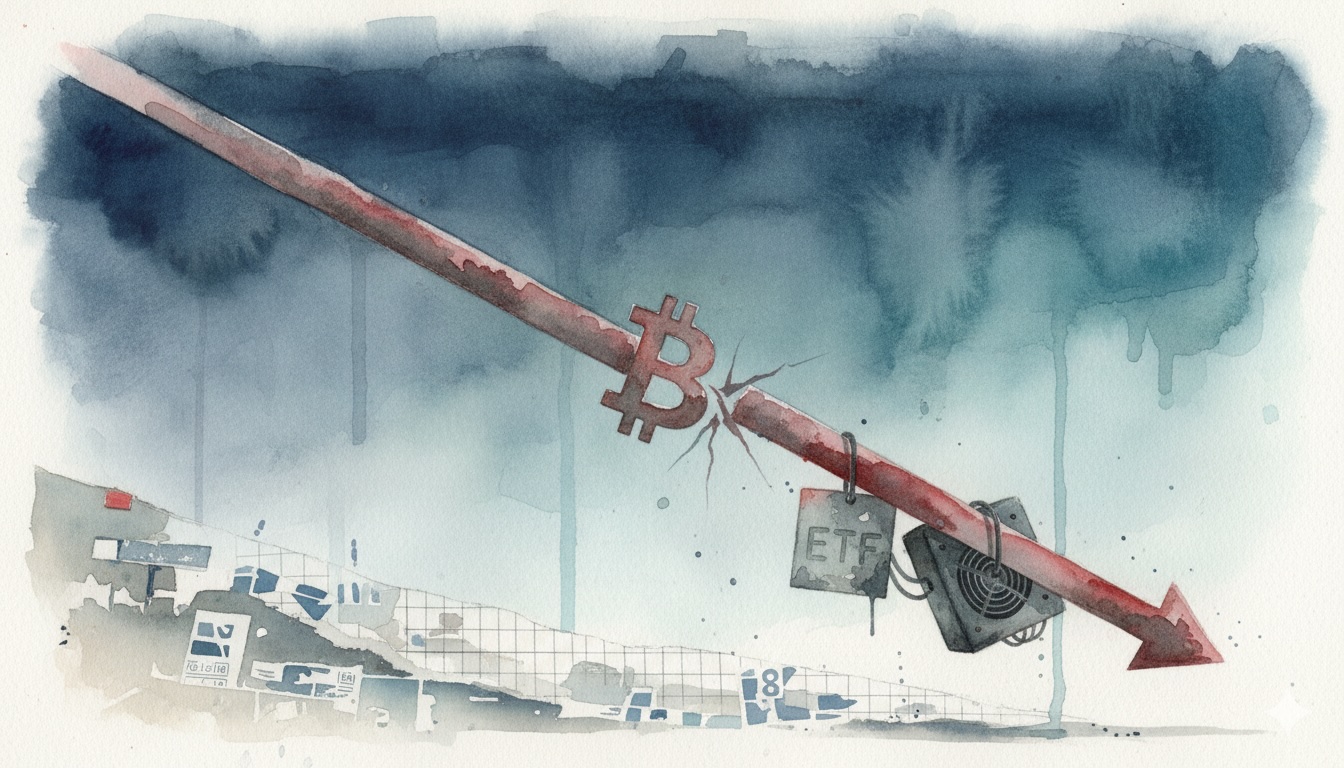
Bitcoin dropped more than 40% over the past month and briefly traded down to a year-to-date low near $59,930 on Friday, (Feb 6, 2026), extending losses to more than 50% from its October 2025 peak around $126,200 as traders pointed to a mix of forced unwinds, dealer hedging tied to ETF-linked structured products, and growing stress across mining economics.
One explanation circulating among market participants centers on leveraged positions built in Asia using options linked to U.S. spot Bitcoin ETFs, financed with cheap Japanese yen funding that later repriced as borrowing costs moved higher. As the rally stalled, margin demands and risk reductions accelerated selling in BTC and other high-beta tokens, with trading data showing unusually heavy activity around the ETF options complex; one market participant cited a record day in which the largest spot Bitcoin ETF saw about $10.7 billion of turnover and roughly $900 million of options premium change hands, alongside synchronized downside moves in BTC and SOL.
A second mechanism points to dealer hedging flows embedded in bank-issued structured notes referencing spot Bitcoin ETFs. In this framing, when BTC fell through key levels, dealers hedging those notes had to sell underlying exposure, producing “negative gamma” dynamics in which incremental downside forces additional sell hedges, reducing liquidity precisely when the market is already moving lower. The discussion has focused on products that reference spot ETF performance and include barrier features, with one example flagging a level around $78,700 as a point where hedging pressure can intensify once breached.
A third strand ties the selloff to mining-sector strain and a longer-running shift of some infrastructure toward AI data center demand. Analysts have pointed to periods of hashrate weakness as miners curtail operations or redeploy capital, and the selloff revived attention to “hash ribbon” style signals that track whether short-term hashrate trends are slipping below longer-term averages, historically associated with episodes of miner stress. In the same context, estimates cited for mining economics put the average electricity cost to mine one BTC around $58,160, while broader net production expenditure was nearer $72,700, making a sustained trade below $60,000 a pressure point for higher-cost operators.
The positioning backdrop has also shifted on-chain. Data cited alongside the selloff showed wallets holding 10 to 10,000 BTC controlling their smallest share of supply in about nine months, suggesting that this cohort has reduced exposure rather than adding during the drawdown. Whether the move stabilizes will likely depend on whether deleveraging around ETF-linked derivatives and structured products slows, and whether any further hashrate suppression translates into additional difficulty relief quickly enough to ease near-term miner cash-flow constraints.
The material on GNcrypto is intended solely for informational use and must not be regarded as financial advice. We make every effort to keep the content accurate and current, but we cannot warrant its precision, completeness, or reliability. GNcrypto does not take responsibility for any mistakes, omissions, or financial losses resulting from reliance on this information. Any actions you take based on this content are done at your own risk. Always conduct independent research and seek guidance from a qualified specialist. For further details, please review our Terms, Privacy Policy and Disclaimers.
Articles by this author