Bitcoin drops amid US tariff ruling and rate rethink

Bitcoin slid below $65,000 in early Monday trading on Feb. 23, 2026, as global risk appetite wobbled after a U.S. Supreme Court decision striking down most of President Donald Trump sweeping tariffs and as traders reassessed the outlook for U.S. rates, growth and inflation.
The tariff ruling became the session’s catalyst across asset classes, pushing U.S. index futures lower while parts of Asia rallied on the prospect of lower duties for some exporters and higher uncertainty for others. S&P 500 futures fell 0.8%, Dow futures dropped 0.7%, and Nasdaq futures slid 1% in early trading.
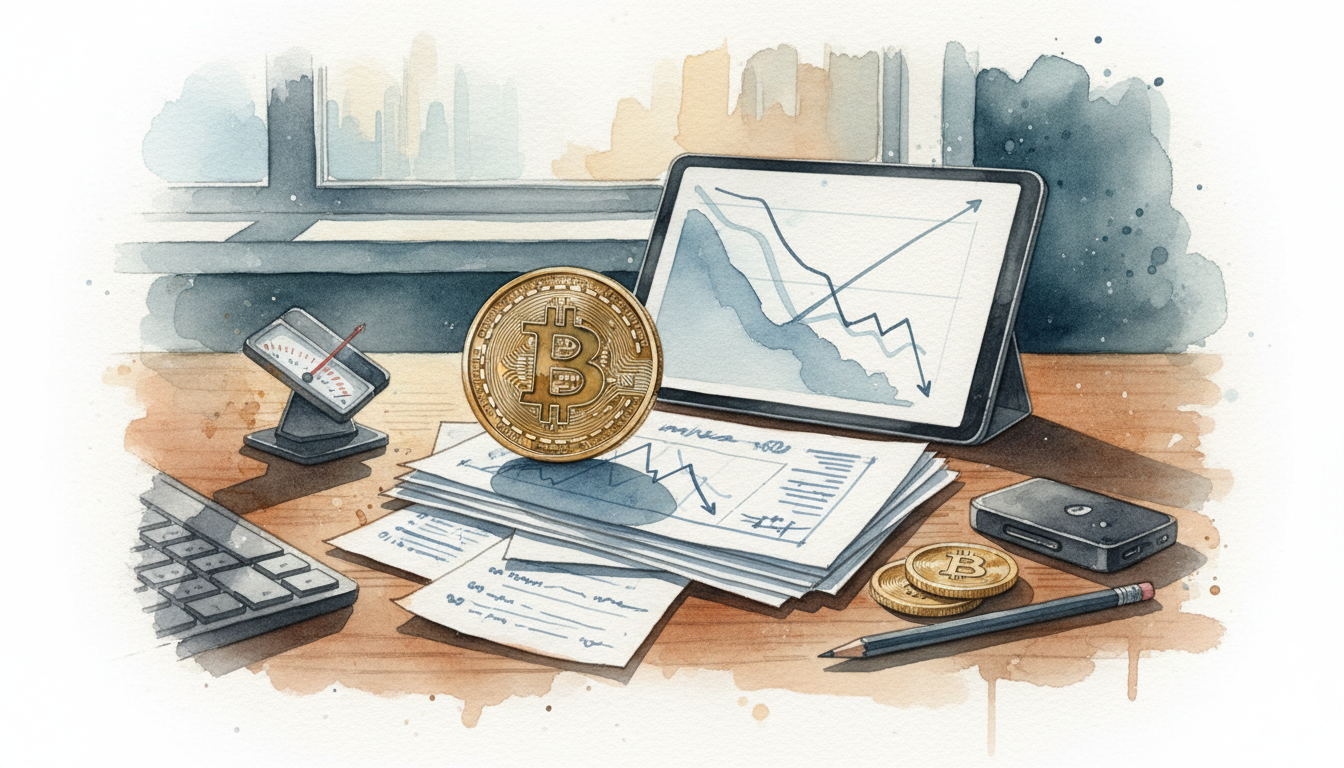
In crypto, Bitcoin fell as much as 5% intraday and briefly traded below $65,000, extending a steep drawdown from its Oct. 6 record of $126,210.50. The move tracked a broader de-risking tone at the start of the week as investors weighed the implications of shifting tariff policy and a macro backdrop that has increasingly been framed as slowing growth alongside stubborn inflation.
Asia’s price action highlighted the uneven “winners-and-losers” dynamic that tariff changes can create. Hong Kong led regional gains, with the Hang Seng jumping 2.2% to 26,980.22, while Japan and mainland China were closed for holidays. South Korea’s Kospi edged 0.1% lower to 5,809.53 after giving back earlier gains, and Australia’s S&P/ASX 200 fell 0.6% to 9,024.40. Taiwan’s Taiex rose 0.5%, and India’s Sensex was up 0.4%, while Bangkok’s SET added 1.1%.
Market participants focused on whether the court decision would ultimately reduce inflation pressure by lowering import costs, or whether the policy response would keep uncertainty elevated. Trump said he would pursue alternative avenues to impose import taxes after calling the decision “terrible,” including an executive order for a global tariff initially cited at 10% under a law that could limit it to 150 days, later raised to 15%, and additional tariffs that could come via Commerce Department investigations.
Strategists described the churn as a repricing process rather than a clean risk-on or risk-off shift. Benjamin Picton of Rabobank said the mixed regional reaction was “highlighting the winners-and-losers effect of shifts in tariff policy that has just delivered a boost to countries who previously had a comparatively bad deal,” adding that U.S. tariff policy would remain a source of uncertainty as traders tried to price outcomes that were still subject to change.
In the U.S., the policy shock landed on top of data that revived concerns about the economy cooling while inflation remains a constraint on the Federal Reserve. On Friday, major U.S. stock indexes finished higher after the tariff decision, even as investors digested softer growth and firmer inflation signals. Treasury yields rose on the day, reflecting shifting expectations for the path of policy rates.
Rate positioning remained a key anchor for cross-asset moves. Traders continued to price at least two Fed cuts this year, according to CME Group data cited in the market coverage, even as policymakers have signaled they want clearer evidence inflation is easing before moving further. That tension between “slowing growth” and “faster inflation” helped explain why equities could rally on the tariff headline while futures softened into the new week and crypto struggled to hold gains.
Bitcoin’s slide also stood out because it came alongside a rotation into traditional havens. Gold rose 1.9% and silver climbed 5.4% in early Monday dealing, moves that reinforced the day’s cautious tone even as some Asian equity benchmarks advanced. In currency markets, the U.S. dollar slipped to 154.40 yen from 154.94, while the euro strengthened to $1.1820 from $1.1797, reflecting shifting rate and risk expectations.
Oil prices eased, adding another signal of macro uncertainty. U.S. benchmark crude fell 77 cents to $65.71 a barrel, while Brent slipped 74 cents to $70.56.
For Bitcoin traders, the focus turned to how the move below $65,000 would interact with positioning and liquidity. The early-week drop placed attention on whether systematic selling and forced deleveraging would accelerate if the market failed to reclaim nearby levels, particularly with broader risk assets reacting to the tariff ruling and the Fed’s policy dilemma. With Bitcoin still far below its Oct. 6 peak of $126,210.50, the drawdown kept sensitivity high to macro headlines that can rapidly swing sentiment across futures, rates, and crypto.
The material on GNcrypto is intended solely for informational use and must not be regarded as financial advice. We make every effort to keep the content accurate and current, but we cannot warrant its precision, completeness, or reliability. GNcrypto does not take responsibility for any mistakes, omissions, or financial losses resulting from reliance on this information. Any actions you take based on this content are done at your own risk. Always conduct independent research and seek guidance from a qualified specialist. For further details, please review our Terms, Privacy Policy and Disclaimers.
Articles by this author