Bitcoin price pressured by deleveraging and persistent ETF withdrawals
Bitcoin slid toward the closely watched $70,000 zone on Feb. 5, 2026, as risk assets sold off, extending a week of drawdowns that has been amplified by forced deleveraging and persistent withdrawals from U.S.-listed spot bitcoin ETFs.
The drop put the $70,000 handle in focus as a psychological level for traders, but the more immediate pressure came from how the move unfolded: rapid downside momentum, lower liquidity, and liquidation-driven flows that can push price beyond where discretionary buyers initially plan to step in. In Asia hours, bitcoin traded below $71,000 at one point during a broader selloff linked to an AI-led tech rout, according to market reporting, before attempting to stabilize.
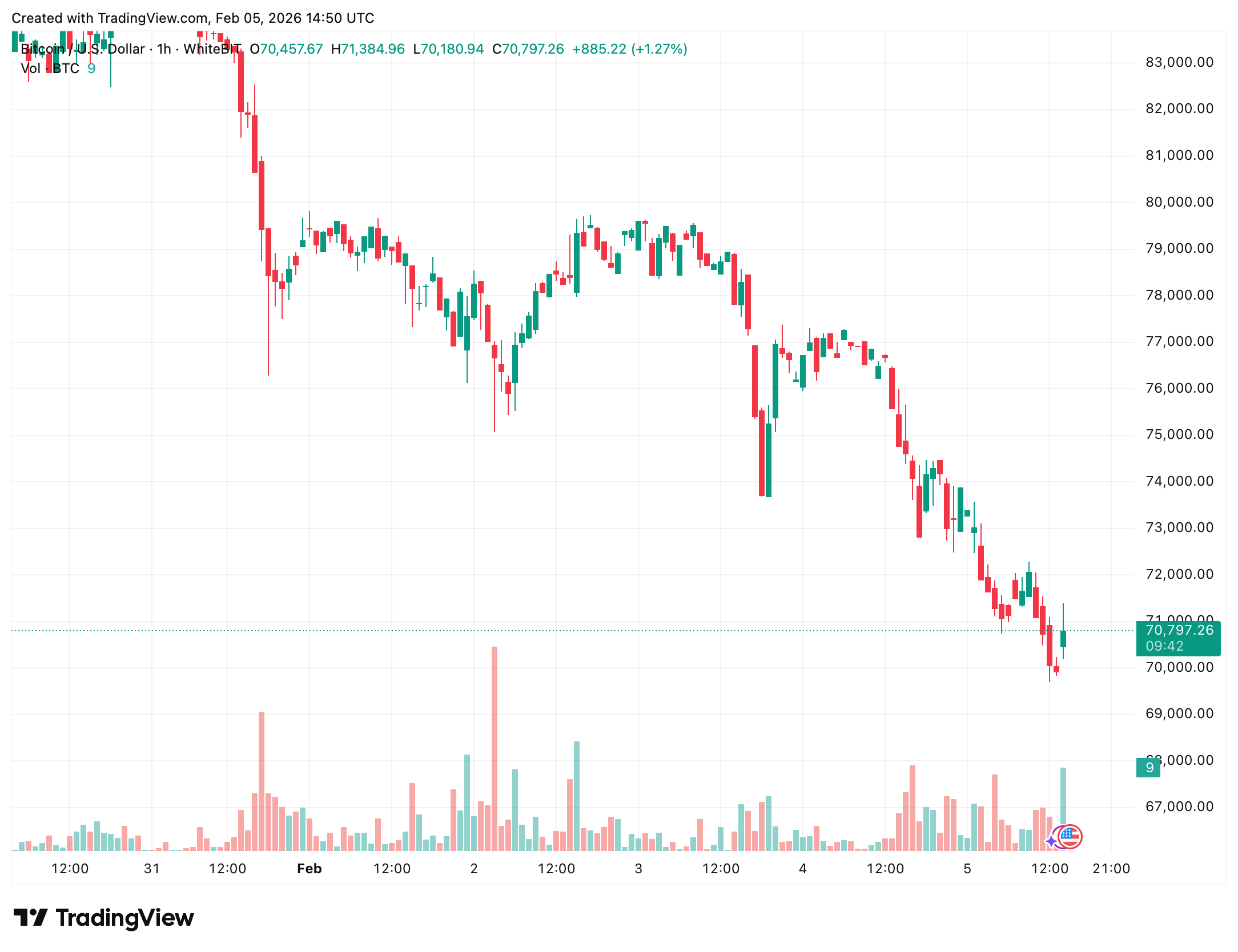
Price data show bitcoin fell sharply from late-January levels after retreating from a prior peak, with daily reference prices dropping into the low-$70,000s by Feb. 5. While the exact “line in the sand” varies by venue, the market’s fixation on $70,000 reflects how round numbers concentrate stop orders and options strikes, turning a simple price level into a microstructure event when volatility is elevated.
ETF flow data added to the caution. U.S.-listed spot bitcoin ETFs logged another day of net outflows on Feb. 3-4, while some flows rotated toward other major-asset products in the same wrapper. Outflows do not map one-to-one with spot selling in real time, but in a falling tape they can reduce the marginal bid that had supported rebounds during calmer conditions, especially when market makers widen spreads and hedge more defensively.
Derivatives positioning has also mattered because liquidations create mechanical selling. During the earlier leg of the week’s slide, Bitcoin pushed down toward roughly $73,000 amid a wave of forced closures that market commentary pegged in the hundreds of millions of dollars across venues. Those cascades can create “air pockets,” where price travels quickly through levels that normally attract limit bids, then snaps back once the forced flow exhausts.
The broader context is that crypto’s risk beta has reasserted itself just as investors reassessed crowded exposure to high-growth themes. That dynamic showed up in cross-asset trading as well, where the same sessions that pressured bitcoin also coincided with stress in tech-heavy positioning, reinforcing the tendency for leveraged crypto to behave like a high-volatility expression of macro risk appetite rather than an idiosyncratic story.
For traders, the next checkpoints are less about a single number than the plumbing around it: whether ETF flows keep bleeding, whether funding and open interest reset without another liquidation burst, and whether spot depth improves enough for $70,000-area bids to absorb sell pressure instead of stepping aside.
The material on GNcrypto is intended solely for informational use and must not be regarded as financial advice. We make every effort to keep the content accurate and current, but we cannot warrant its precision, completeness, or reliability. GNcrypto does not take responsibility for any mistakes, omissions, or financial losses resulting from reliance on this information. Any actions you take based on this content are done at your own risk. Always conduct independent research and seek guidance from a qualified specialist. For further details, please review our Terms, Privacy Policy and Disclaimers.
Articles by this author