Bitcoin difficulty jumps 15% to record

The global mining landscape is undergoing a period of intense recalibration as hardware efficiency and energy grid stability become the primary drivers of network growth. This recent surge in technical benchmarks underscores the industry’s ability to recover from systemic shocks, ensuring that the decentralized ledger maintains its security standards regardless of external conditions.
The Bitcoin network has implemented its most significant absolute difficulty adjustment to date, reflecting a sharp recovery in global computing power.
On Thursday, the network difficulty increased by approximately 15 percent, marking a record jump in terms of absolute units. This mechanism automatically adjusts every 2,016 blocks (roughly every two weeks) to ensure that the time between blocks remains approximately 10 minutes. The current increase is a direct response to the massive influx of hashrate that returned to the network over the last several days.
The primary driver for this adjustment was the restoration of power and operations across the United States. During the recent winter storms, large-scale mining facilities in regions like Texas participated in demand response programs, voluntarily cutting power to stabilize local energy grids. As temperatures rose and industrial miners resumed full-scale operations, the network hashrate surged from its weather-induced lows of 550 EH/s to over 720 EH/s.
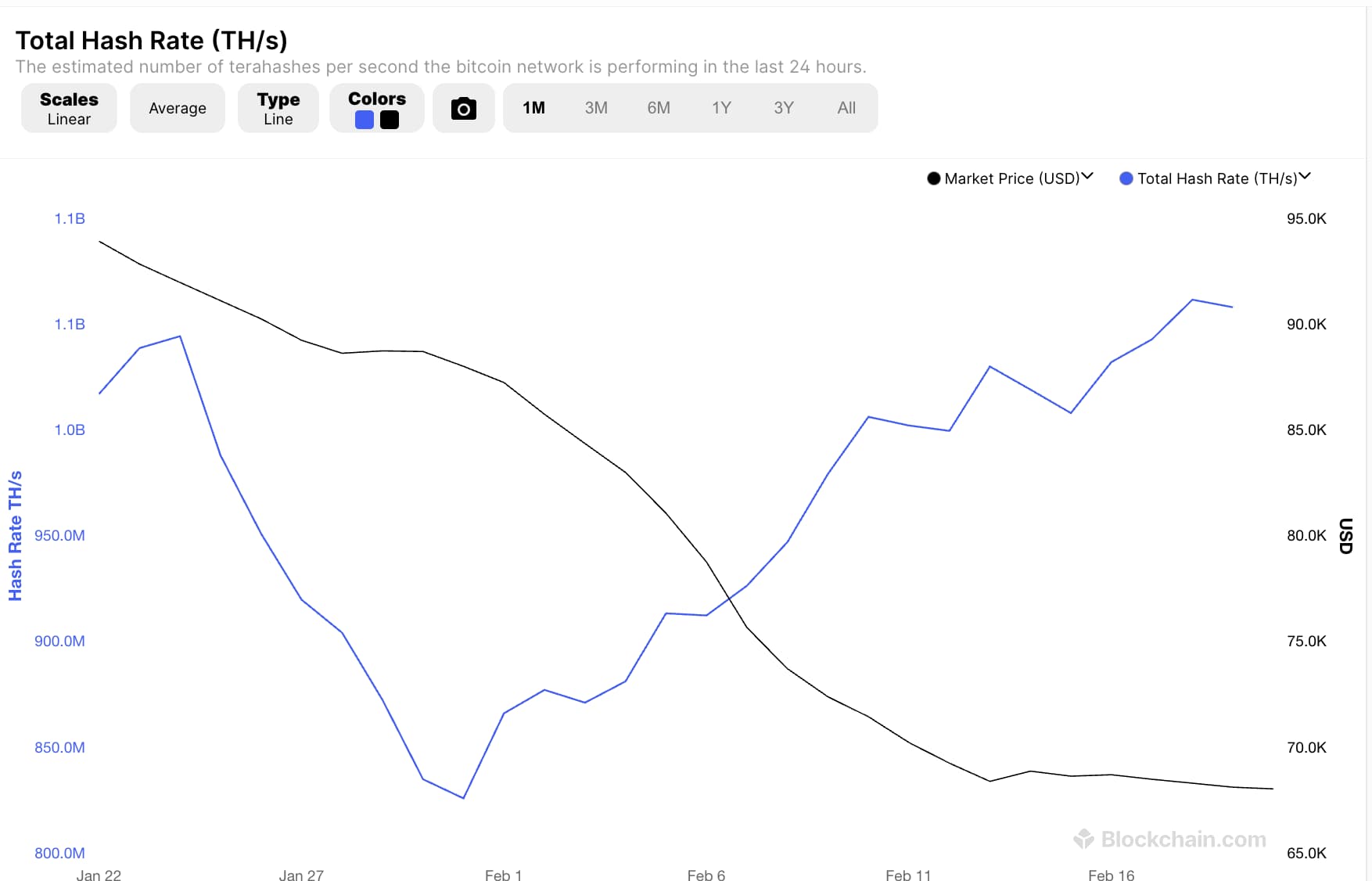
On the data side, the increased difficulty significantly raises the cost of production for miners, especially in the post-halving environment. Bitcoin mining profitability remains under pressure as hashrate hits new highs, forcing older, less efficient hardware out of the market. Analysts note that while a higher difficulty indicates a more secure network, it also thins the margins for public mining companies.
The timing of this record jump is notable: it follows a period where blocks were being produced much faster than the 10-minute target due to the rapid return of offline machines. This adjustment now resets the “clock,” making it harder for miners to find blocks and bringing the issuance rate back in line with the protocol’s schedule.
For market participants, the resilience of the hashrate despite extreme weather shows the high level of industrialization in the mining sector. However, the resulting difficulty hike may lead to a short-term consolidation among miners as they adjust their operations to account for the increased competition and lower block rewards.
The material on GNcrypto is intended solely for informational use and must not be regarded as financial advice. We make every effort to keep the content accurate and current, but we cannot warrant its precision, completeness, or reliability. GNcrypto does not take responsibility for any mistakes, omissions, or financial losses resulting from reliance on this information. Any actions you take based on this content are done at your own risk. Always conduct independent research and seek guidance from a qualified specialist. For further details, please review our Terms, Privacy Policy and Disclaimers.
Articles by this author