Bitcoin Cash: from the second most valuable blockchain to low-fee payments network
Bitcoin Cash, once described as the second-most-valuable blockchain, is strengthening its role as a low-fee payments network through protocol changes designed to expand utility without raising on-chain costs.
In 2026, Bitcoin Cash positions itself as a low-fee, payments-first blockchain. The network is expanding CashTokens and script features through CHIPs protocol upgrades aimed at keeping everyday transactions inexpensive and predictable.
Bitcoin Cash split from Bitcoin and retains the UTXO model and proof-of-work blockchain consensus mechanism. It targets larger block capacity and staged rule changes to reduce fee spikes so small and medium payments can clear on-chain without channel management.
Industry participants often frame the ecosystem in three layers. The base layer runs proof-of-work and clears transactions. The programmable layer changes through CHIPs, which define new consensus and scripting features. The distribution layer-wallets, exchanges and merchant tools-shapes whether BCH is easy to use at checkout and in apps.
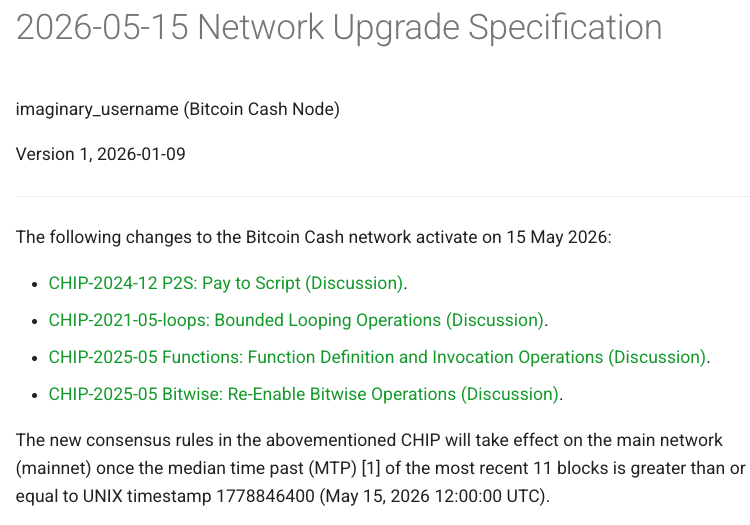
In 2026, upgrade discussions reference restoration of earlier script features and CashVM concepts to add safer, richer contracts. Planned changes undergo public review and chipnet test deployments before activation, following patterns used in the May 15, 2025 upgrade cycle.
CashTokens remain a core feature set. The design aims to let tokens and other primitives increase on-chain activity and miner revenue while keeping fees at everyday levels. Backers argue efficient token operations can deepen demand for block space. Critics warn speculative surges could lift fees and undermine the payments focus if not constrained by protocol limits and wallet policies.
Regular upgrades set expectations for how the payments rail operates. Developers maintain a public CHIPs index and run pre-activation tests. Node teams, including Bitcoin Cash Node, publish documentation and releases to guide operators. Coordinated timelines and broad adoption are used to reduce split risk and settlement disruption.
Competition focuses on cost and user experience. Bitcoin’s model of base layer plus Lightning can deliver fast transfers but adds routing and liquidity steps. BCH seeks to keep most activity on-chain to lower setup overhead for users. Stablecoins handle a large share of digital payments because they avoid price swings, which pressures BCH to remain inexpensive, censorship-resistant and well integrated in wallets and merchant systems.
As of March 18, 2026, BCH was changing hands at roughly $450, with 24-hour trading volume near $240–$260 million. BCH is traded primarily on centralized exchanges, with active markets including BCH/USDT on platforms such as Binance and Bybit. You can compare the trading fees and liquidity in our Bybit vs Binance review.
Adoption depends on distribution. If large exchanges or wallets scale back support or route liquidity elsewhere, BCH usability can slip even if the protocol functions as designed. Better wallet design, merchant plug-ins and consistent settlement policies can increase on-chain volumes when fees remain low and predictable.
Market watchers outline several paths for 2026. A base case keeps fees low while wallets and merchant tools improve. A stronger case sees CashTokens and scripting upgrades draw more settlement and application activity without raising fees, lifting miner revenue. A weaker case features reduced exchange routing or merchant integrations, limiting day-to-day usage.
The material on GNcrypto is intended solely for informational use and must not be regarded as financial advice. We make every effort to keep the content accurate and current, but we cannot warrant its precision, completeness, or reliability. GNcrypto does not take responsibility for any mistakes, omissions, or financial losses resulting from reliance on this information. Any actions you take based on this content are done at your own risk. Always conduct independent research and seek guidance from a qualified specialist. For further details, please review our Terms, Privacy Policy and Disclaimers.
Articles by this author