Trust Wallet vs Best Wallet comparison: hands-on wallet test in 2026
We tested Trust Wallet and Best Wallet in the same real-world flows and are writing this as an independent report based on hands-on use. We focused on practical questions: how fast setup feels, how clear confirmations and fees are, and when each wallet is genuinely more convenient.
In this matchup, Trust Wallet came across as the more mature, general-purpose option, while Best Wallet felt like a higher-risk tool built around presales and more speculative workflows. Based on our test, we use these overall scores as a guide: Trust Wallet 4.5, Best Wallet 3.8.
Best Wallet vs Trust Wallet at a glance
After testing both wallets with identical flows – wallet creation (Trust: 2 min, Best: 3 min), test transactions ($15 USDT sent with $0.03 gas), cross-chain swaps ($100 USDC → BNB with 2.2% vs 4.6% total cost), presale participation (Best Wallet claiming delays), and recovery on secondary devices (Trust: 90 sec via seed phrase, Best: 2 min via cloud) – Trust Wallet delivered on reliability (no balance sync issues, consistent transaction confirmations) and broader network support (70+ chains vs 20+ in Best Wallet). Best Wallet offered faster in-app presale access and simpler onboarding (email-based vs seed phrase), but suffered from claiming errors (40-minute token unlock delay), worse swap rates (4.6% vs 2.2% on cross-chain), and balance display bugs ($0 shown for 15 minutes despite on-chain funds).
Trust Wallet holds an overall rating of 4.5/5 overall as a mature multi-chain wallet, while Best Wallet trails at 3.8/5 due to reliability concerns and higher costs.
| Category | Best Wallet | Trust Wallet | Winner |
|---|---|---|---|
| Overall GNcrypto rating | 3.8 / 5 | 4.5 / 5 | Trust Wallet (overall) |
| Supported Assets & Networks | 4 / 5 | 5 / 5 | Trust Wallet |
| Security & Key Management | 3 / 5 | 4.5 / 5 | Trust Wallet |
| Transaction Costs & Speed | 4 / 5 | 4 / 5 | Draw |
| User Experience & Interface | 4 / 5 | 4.5 / 5 | Trust Wallet |
| DeFi & dApp Integration | 4 / 5 | 4 / 5 | Draw |
| Recovery & Backup Systems | 3 / 5 | 4.5 / 5 | Trust Wallet |
| Customer Support & Documentation | 5 / 5 | 5 / 5 | Draw |
Core vision and wallet philosophy: what these wallets are built around
While testing Best Wallet vs Trust Wallet, we focused on the core product philosophy behind each app.
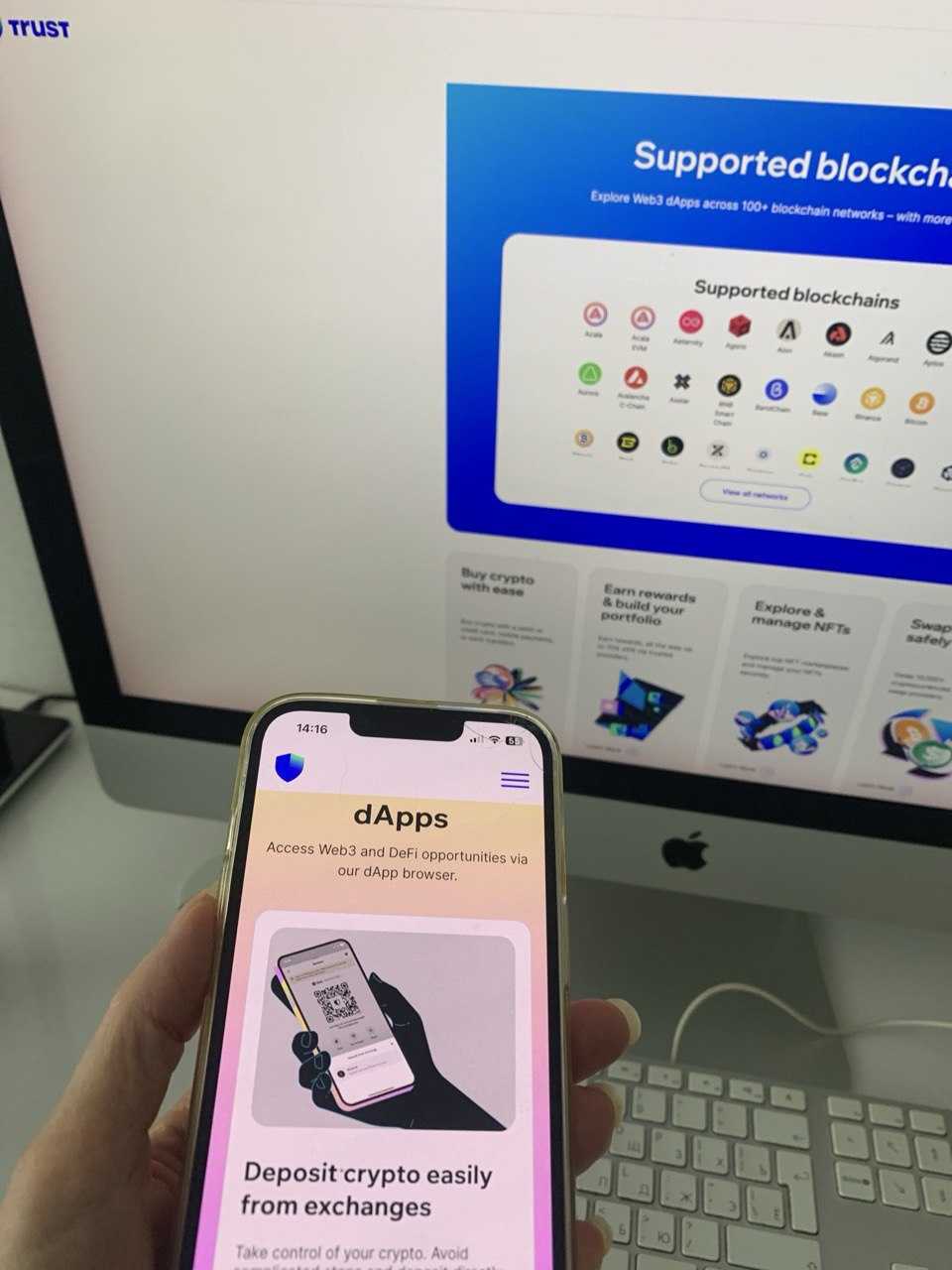
Trust Wallet worked well as an everyday wallet for users who manage a multi-chain portfolio and often connect to Web3. It has both a mobile app and a browser extension, so the common setup (phone for quick actions, computer for dApps) can stay under one brand. You also do not have to move your seed phrase between devices just to switch where you use the wallet.
Best Wallet took a different approach. Its main idea is less about simply storing and moving assets, and more about pulling users into in-app workflows: presales, activities tied to its own token, and quick swaps across networks.
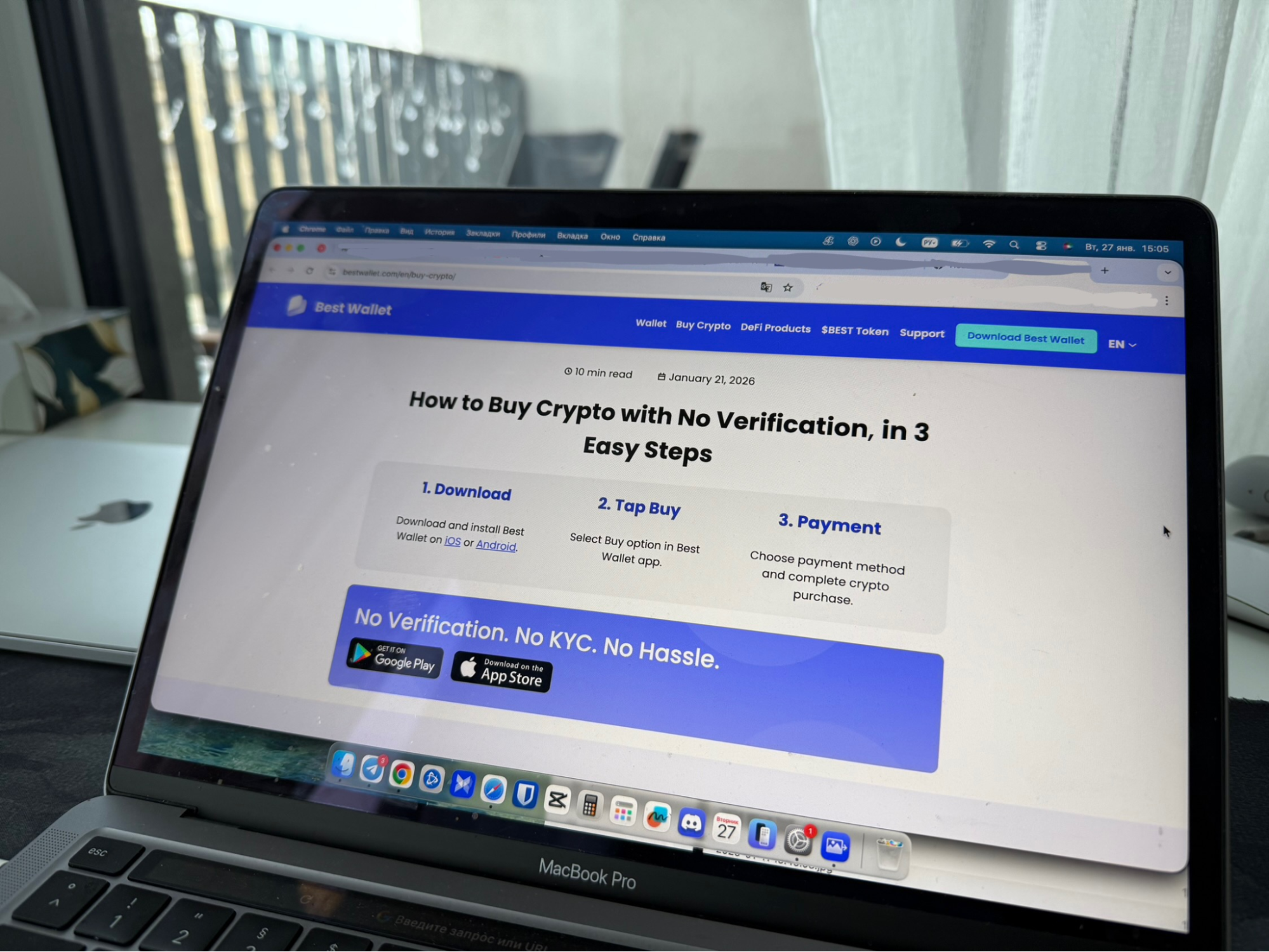
In our check, we saw three common use cases:
- Presales and Launchpad. A built-in storefront allows for buying tokens directly within the interface. The upside is fewer detours to third-party pages and less risk of ending up on a phishing link.
- Activities tied to the BEST token. Best Wallet integrates gamified quests and rewards. While engaging, this focus makes it feel more like a marketing-driven product than a straightforward digital safe.
- Cross-chain swaps. Best Wallet promotes cross-chain swaps as a fast feature without going through an exchange. In our $100 USDC (Polygon) → BNB (BSC) test, Best Wallet completed the swap in 4 minutes but charged 4.6% total cost ($95.40 received). Trust Wallet took 8 minutes via 1inch but only charged 2.2% ($97.80 received). This is convenient for speed, but costs 2.4% more per swap.
That “in-app workflow” approach also comes with clear downsides that affect trust and the final score.
- Presale and claiming risk. The most painful part is often not the purchase, but claiming tokens after the presale ends. Users report sync errors or contract-connection issues and cannot withdraw tokens right away.
- Technical stability. Balances can show as 0 even when funds exist on the address. Transactions can also look stuck “processing” in the app even when explorers show them confirmed.
- Swaps and the final price. On built-in swaps, the effective rate can be noticeably worse than on major DEX routes, and users often view the difference as a hidden cost.
- Token storefront conflicts. When a wallet becomes a storefront for presales and early launches, it raises a natural question: is this a neutral recommendation, or marketing.
Overall, Trust Wallet comes across as a neutral tool for everyday Web3 use, while Best Wallet reads more like a product for social-style activity and speculative workflows. Based on these issues – presale claiming failures, balance display bugs, and consistently worse swap rates – we cannot recommend Best Wallet as a primary wallet for storing significant funds. It may work for small speculative amounts, but reliability problems make it unsuitable for serious holdings.
Custody, key ownership, and recovery: key control and backups
In this part of the test Trust Wallet vs Best Wallet, we looked at how key ownership and account recovery work in real use. Both wallets position themselves as self-custody, but the experience is very different. Trust Wallet leans on a classic seed phrase, while Best Wallet leans on login-based access and cloud recovery.
We tested four scenarios we ran in both wallets, with brief takeaways.
- Wallet setup and who holds the keys. In Trust Wallet, setup follows a standard onboarding flow, and you receive a seed phrase as the main recovery key. In Best Wallet, onboarding is often tied to a login (email or phone) plus a local PIN or biometrics, so getting started feels easier, but more responsibility shifts to protecting your account and device.
- Backup: seed phrase versus cloud recovery. In Trust Wallet, the baseline approach is storing your seed phrase offline. You can enable a cloud backup separately if you want extra redundancy. In Best Wallet, recovery depends on cloud backup and account access, which is convenient, but it adds new risk points (iCloud or Google account security, plus SIM-swap risk for phone numbers).
- Restoring on a new device. Trust Wallet restores in a straightforward way: enter the seed phrase and regain access to your funds. In Best Wallet, recovery happens by regaining control of the account, which can help beginners. However, if you run into issues with email, phone number, two-factor protection, or cloud access, you have another critical layer you need to restore first.
- Portability and control in stress scenarios. Trust Wallet is more portable: you can import the wallet into another app using the seed phrase, and exporting private keys is available through advanced settings. Best Wallet’s multi-wallet setup and cloud recovery are convenient, but we would not treat it as a long-term vault for meaningful balances, especially if you plan to participate in presales actively.
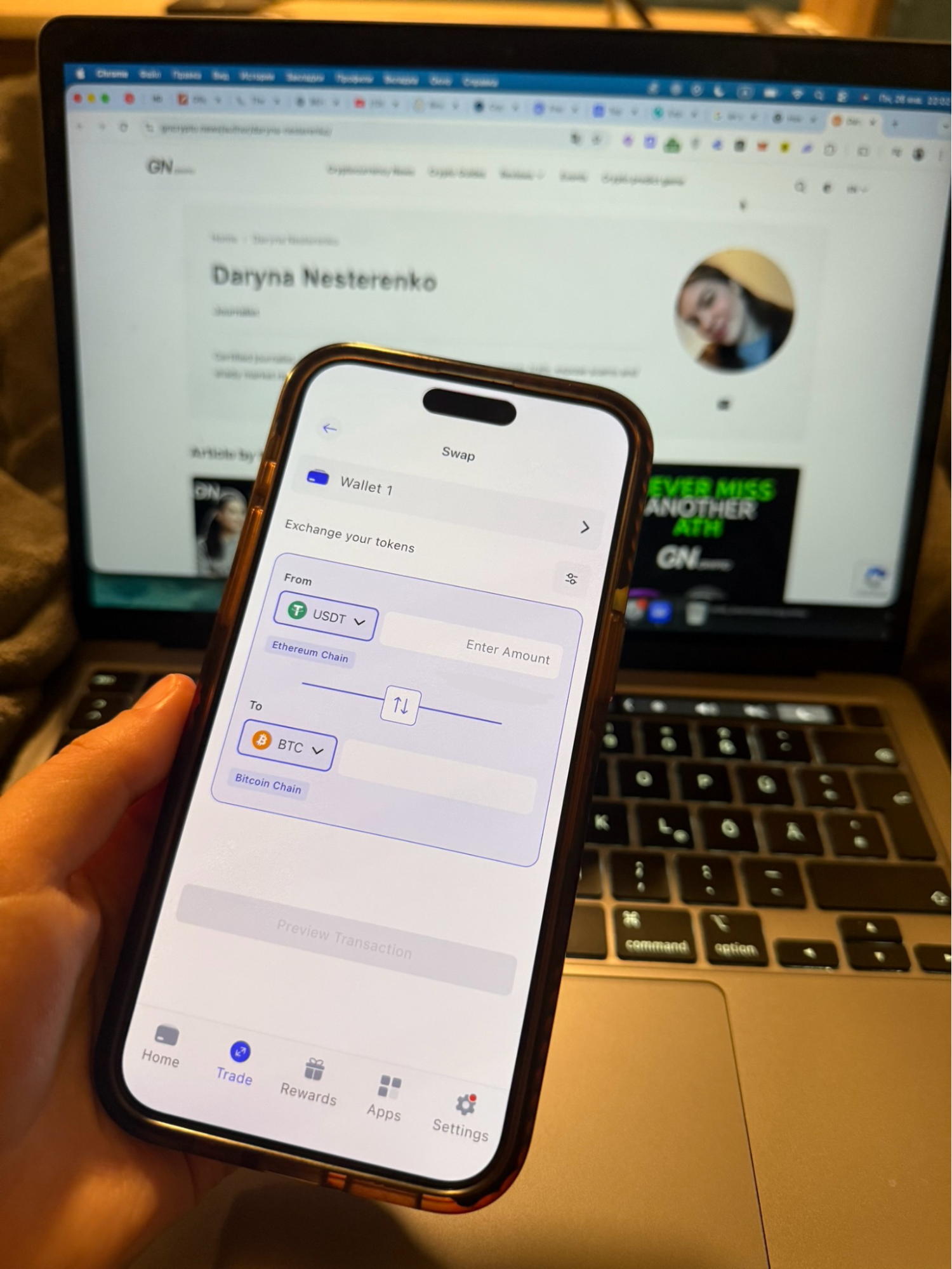
Our takeaway is that Trust Wallet requires seed phrase discipline, but gives clearer control and portability.
Best Wallet lowers the barrier to entry, but because it adds dependency on accounts and cloud services, plus more potential points of failure, we cannot recommend it as a safe place for long-term storage.
Blockchain, token, and NFT support: networks, tokens, and NFTs
To decide who comes out ahead in the Trust Wallet vs Best Wallet comparison, we also looked at how each wallet handles tokens and NFTs in everyday use, and where limitations show up that may push you toward a second wallet.
We tested three scenarios we tested in both wallets, with short takeaways.
- Chains and tokens for everyday use. supports 70+ blockchains including Ethereum, BSC, Polygon, Solana, Cosmos, and Bitcoin. Best Wallet supports 20+ chains (primarily EVM: Ethereum, BSC, Polygon, Arbitrum, Optimism). Trust Wallet proved broader in coverage and easier to use as a general wallet for a mixed portfolio.
- NFTs and collection management. In Trust Wallet, we found the NFT section quickly and could browse collections in one place, which helps if you hold NFTs across multiple networks. In Best Wallet, NFT use is mainly built around a phone and built-in Web3 access to marketplaces. That is fine for browsing and occasional actions. If you trade NFTs actively and often work on a computer, you will likely want a wallet with a stronger toolset and tighter browser workflows.
- Cross-chain swaps and total cost. In Trust Wallet, the final swap cost depends on the network, gas, and the provider. Checking the final amount before confirming was a baseline habit, especially for cross-chain actions. In Best Wallet, the main advantage is speed and simplicity. This is also where users most often complain about the effective rate and slippage. For a small speculative slice of a portfolio, that may be acceptable. If you are sensitive to a 1% to 3% difference on swaps, it is safer to compare routes and pricing across alternatives.
Trust Wallet looked like the safer primary multi-chain wallet in this comparison, especially if you value stability and predictable handling of assets and NFTs. Best Wallet may work as a secondary tool for presale participation and small cross-chain swaps (under $100), but frequent claiming errors, balance sync failures, and 2-4% worse swap rates make it unsuitable for amounts you cannot afford to lose access to temporarily.
Trust Wallet vs Best Wallet: which should you choose?
If you want a portfolio-first wallet with simple multi-chain basics
Choose: Trust Wallet
Trust Wallet is a strong default for everyday holding and sending across multiple networks. Setup is fast, basic actions work without manual network configuration, and the mobile experience is built around viewing and managing a multi-chain portfolio. The main trade-off shows up when you use DeFi in a browser context: connections can feel less predictable than in a wallet that prioritizes browser-based flows.
If you want quick setup for sending and managing assets across networks
Choose: Trust Wallet
Trust Wallet works well when your main goal is simple asset management. Sending is convenient, but the network choice inside the send flow also adds risk: picking the wrong network is an easy mistake, especially when you move fast. If you enable cloud backups, account security matters even more, since you are depending on your backup account protections.
If you care most about presales, launches, and in-app reward quests
Choose: Best Wallet
Best Wallet is built around discovery and ecosystem incentives. It offers in-app token presales and an “Upcoming Launches” style launchpad for early-stage buys, plus airdrop-style quests and activities centered around the BEST ecosystem. The downside is reliability: in our test, claiming $25 worth of presale tokens triggered a sync error and required 40 minutes and 3 app restarts to access funds after vesting unlock. Multiple users report similar claims failures.
If you want cross-chain swaps in a few taps, but can accept slippage
Choose: Best Wallet
Best Wallet can feel convenient for cross-chain swaps without moving funds to an exchange. The main trade-off was execution quality and app stability: swaps can show noticeable slippage or worse pricing than major DEX routes, especially on smaller tickets. We also saw reports of balances showing 0 and in-app status updates lagging behind explorers, which can add stress in live use.
How we test hot crypto wallets
At GNcrypto, we put transparency first when evaluating hot cryptocurrency wallets. Our reviews are based on hands-on testing and thorough analysis across all key dimensions that matter for self-custody and daily crypto use.
Our basic principles for evaluating hot crypto wallets can be found in this article.
The material on GNcrypto is intended solely for informational use and must not be regarded as financial advice. We make every effort to keep the content accurate and current, but we cannot warrant its precision, completeness, or reliability. GNcrypto does not take responsibility for any mistakes, omissions, or financial losses resulting from reliance on this information. Any actions you take based on this content are done at your own risk. Always conduct independent research and seek guidance from a qualified specialist. For further details, please review our Terms, Privacy Policy and Disclaimers.
Articles by this author