Best wallet for crypto in 2026: Top hot, non-custodial picks ranked

Choosing a secure hot wallet is getting harder as networks evolve. We compared four major providers across several key metrics – from fee structures to past security incidents – to find the top daily-use option for 2026.
Overall rating:
- Whitewallet: 4.2/5 (best for beginners)
- Exodus: 4.1/5 (best interface and portfolio management)
- Trust Wallet: 4.0/5 (broadest network coverage + gas sponsorship)
- MetaMask: 3.9/5 (best for DeFi and dApps on EVM)
Based on testing, Whitewallet is the best crypto wallet for beginners and everyday use.
What a crypto wallet Is: how private keys work and why it matters
Coins are not stored “in the app”: the wallet creates and protects private keys or a seed phrase that signs transactions. If you lose the seed, you cannot restore access, so backups and device security matter.
Non-custodial wallets keep key control with the user, which reduces the risk of an account freeze, but increases personal responsibility for security. Hot wallets are more convenient for everyday transfers and connecting to dApps, while cold wallets are better for long-term storage. The best crypto wallets provide clear key management, safe transfers, and a smooth Web3 experience.
How we chose the best wallets: security, fees, assets, and usability
For our best crypto wallet ranking, we used practical criteria. For security, we considered known vulnerabilities, real-world user risks (phishing, fake extensions, backup compromises), and how the team responds to incidents.
For cost, we compared service fees on swaps and any extra charges, because network gas depends on the chain and applies everywhere.
For coverage, we looked at how many networks and tokens are supported out of the box, and how easy it is to manage multi-chain assets without mistakes. We also evaluated UX: how quickly you can set up the wallet, understand transaction details, and avoid confusion around networks and permissions.
Rating methodology
We rate hot wallets on a 1.0-5.0 scale using 7 weighted criteria. Each criterion gets a score from 1/5 to 5/5, multiplied by its weight, then summed for a final rating.
Weighting:
- Security & Key Management (25%)
- Supported Assets & Networks (20%)
- Transaction Costs & Speed (15%)
- User Experience & Interface (15%)
- DeFi & dApp Integration (10%)
- Recovery & Backup Systems (10%)
- Customer Support & Documentation (5%)
- Security (25%): We start at 5/5 and reduce points for confirmed incidents (exploited vulnerabilities, user losses with documented dates/amounts). We distinguish wallet exploits from user-targeted attacks (phishing, fake extensions), but both affect the score if widespread.
- Cost of use (15%): 5/5 = no service fees + cost-saving features (gas sponsorship). We deduct for built-in swap fees or spreads. Network gas isn’t penalized – it applies to all wallets.
- Coverage (20%): 5/5 = broadest network and asset support. Lower scores for narrower focus (EVM-only, limited chains).
- Interface (15%): 5/5 = native, intuitive UI. We deduct for complexity (lots of network settings, confusing signatures, Web3 permissions).
- DeFi integration (10%): 5/5 = built-in browser, WalletConnect, native swaps, staking UI. Lower scores for limited dApp access.
- Recovery (10%): 5/5 = BIP39 seed, backup verification, cloud backup, social recovery. Lower scores for weak backup flows.
- Support (5%): 5/5 = 24/7 support, comprehensive docs. Lower scores for slow responses or outdated guides.
Top crypto wallet picks: best crypto wallets by category
The best crypto wallet depends on your use cases. Sometimes simplicity and multi-chain support matter most, sometimes dApp access does. For larger holdings, cold storage is usually the top priority.
- Overall (best overall): Whitewallet: a strong starting point for everyday use and multi-chain without extra setup.
- Beginner (best for beginners): Whitewallet: a low learning curve and clear actions like “receive, send, swap”.
- Mobile (best mobile wallet): Trust Wallet: broad multi-chain coverage in a smartphone-first format, especially if your portfolio spans multiple networks.
- Web3 (best for dApps and DeFi): MetaMask: the most practical choice for the EVM ecosystem when you connect to services and sign transactions regularly.
- Hardware (best for long-term storage): Trezor. While we are not reviewing hardware wallets here, it is worth noting that if you hold larger amounts and want your keys kept offline, it is often considered the best Bitcoin wallet for long-term BTC storage.
Pick the category that matches your style. For day-to-day activity, a hot wallet is usually more convenient. For a long-term vault, a hardware device makes more sense.
Whitewallet: a reliable multi-chain wallet for getting started
Rating: 4.2/5
Whitewallet is a non-custodial hot wallet in a mobile app format. Its key advantage is multi-chain support: according to the review and WhiteBIT documentation, it works with 10 networks (including Ethereum, Base, Arbitrum, Optimism, Linea, Solana, Tron, TON, BSC and Whitechain). This is useful if you hold assets across different ecosystems and do not want to install several separate wallets.
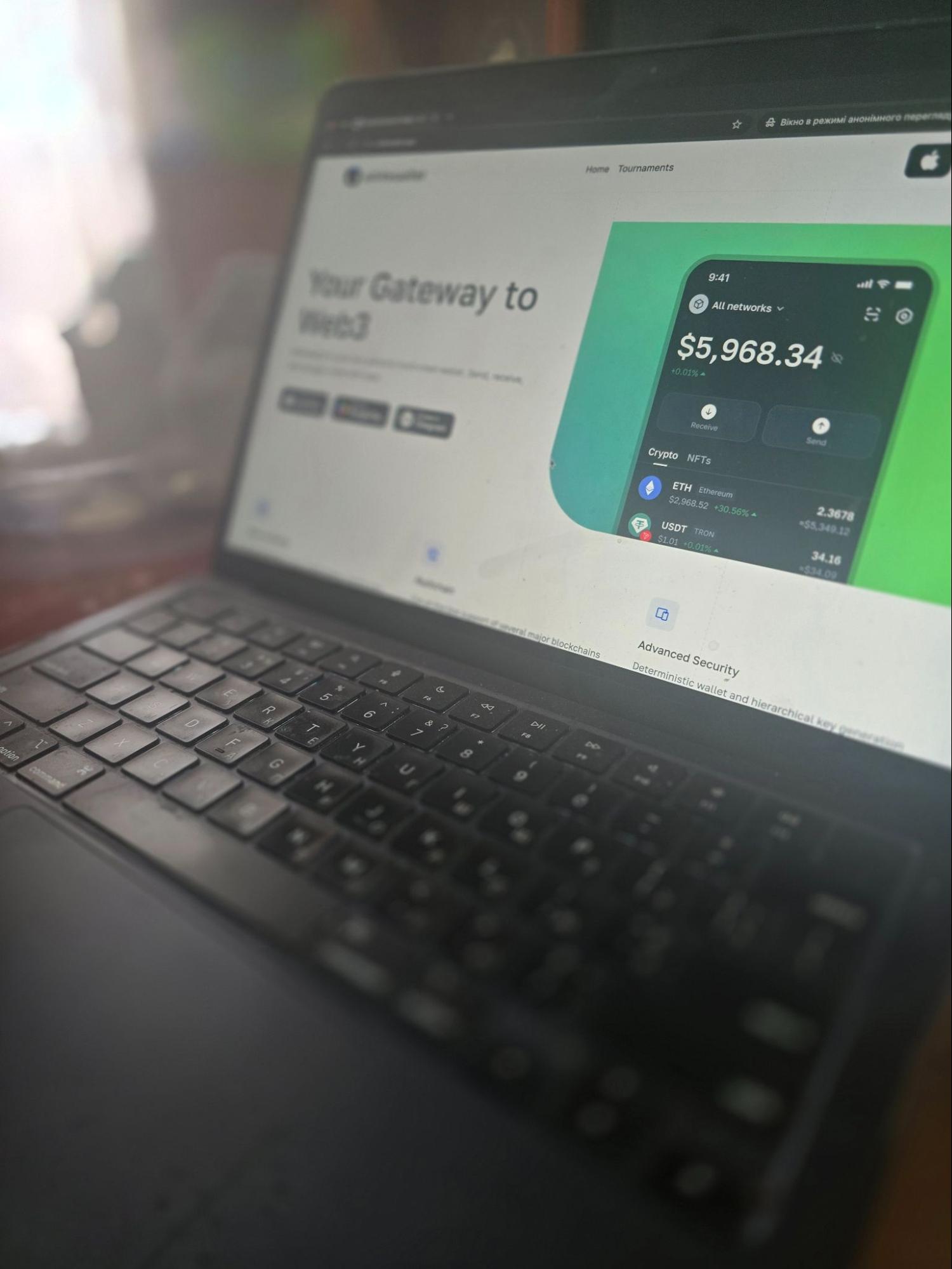
In terms of cost, Whitewallet works like a typical software wallet: there is usually no fee for holding funds, but when you send transfers or interact with smart contracts, you pay the network fee (gas) on the selected blockchain. The service terms also note that any service fees (if applicable) are shown in the app before you confirm an action. For newcomers on Whitechain, there is a bonus mechanism that can cover fees for roughly the first 10 to 12 transactions.
From a security perspective, two things matter:
- there have been no confirmed cases of an “app hack” or malware-related incidents involving Whitewallet,
- however, there are known cases of a brand clone or fake targeting users, so download the wallet only from official sources!
| Criterion | Score | Weight |
|---|---|---|
| Security & Key Management | 5/5 | 25% |
| Supported Assets & Networks | 4/5 | 20% |
| Transaction Costs & Speed | 4/5 | 15% |
| User Experience & Interface | 5/5 | 15% |
| DeFi & dApp Integration | 3/5 | 10% |
| Recovery & Backup Systems | 4/5 | 10% |
| Customer Support & Documentation | 4/5 | 5% |
Exodus: a clean interface and broad network support
Rating: 4.1/5
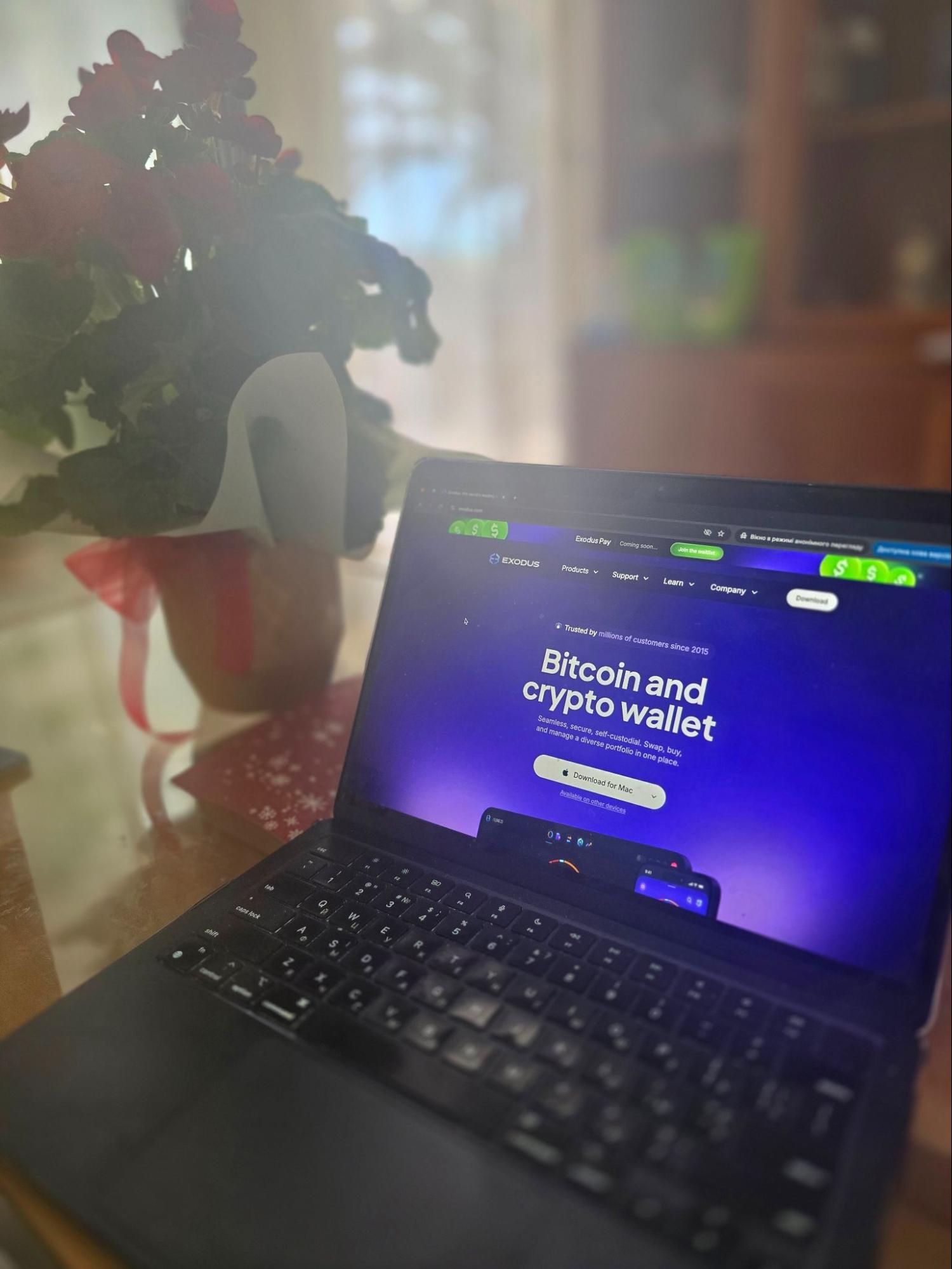
Exodus ranks among the best crypto wallets for portfolio management. It’s a non-custodial hot wallet often chosen for its intuitive interface. It is available on desktop and mobile, and it suits users who want to hold assets and manage a portfolio in one app. The team claims support for 50+ networks and a very broad asset list (including many tokens within the supported blockchains).
Fees follow the standard model: Exodus typically does not charge for holding funds, but when you send crypto you pay the network fee on the relevant blockchain. If you use the built-in exchange, the total cost is based on the market quote plus a spread.
In general, service costs for a swap can start at 0.5%, and the final figure depends on the pair and liquidity and is shown before confirmation. On some networks (for example, Bitcoin) you can set the fee manually, which is useful if you need to speed up a transaction.
From a security standpoint, Exodus is not commonly associated with headline “mass wallet hacks” with confirmed loss totals, but practical risks still exist.
They are often tied not to the wallet itself, but to the user environment:
- phishing and fake builds or “activators”
- device infection (especially on macOS)
- software supply-chain attacks, for example a malicious npm package that targeted Exodus and Atomic Wallet by modifying local files and swapping recipient addresses.
| Criterion | Score | Weight |
|---|---|---|
| Security & Key Management | 4/5 | 25% |
| Supported Assets & Networks | 5/5 | 20% |
| Transaction Costs & Speed | 3/5 | 15% |
| User Experience & Interface | 5/5 | 15% |
| DeFi & dApp Integration | 4/5 | 10% |
| Recovery & Backup Systems | 4/5 | 10% |
| Customer Support & Documentation | 4/5 | 5% |
Trust Wallet: maximum networks and assets, plus gas sponsorship
Rating: 4.0/5
Trust Wallet is a non-custodial hot wallet that many users treat as a “one-stop” option on mobile. The team focuses on broad multi-chain support and a fast setup with minimal configuration. According to the project, the wallet supports 100+ networks and 10M+ assets, which is useful if your portfolio spans multiple ecosystems.
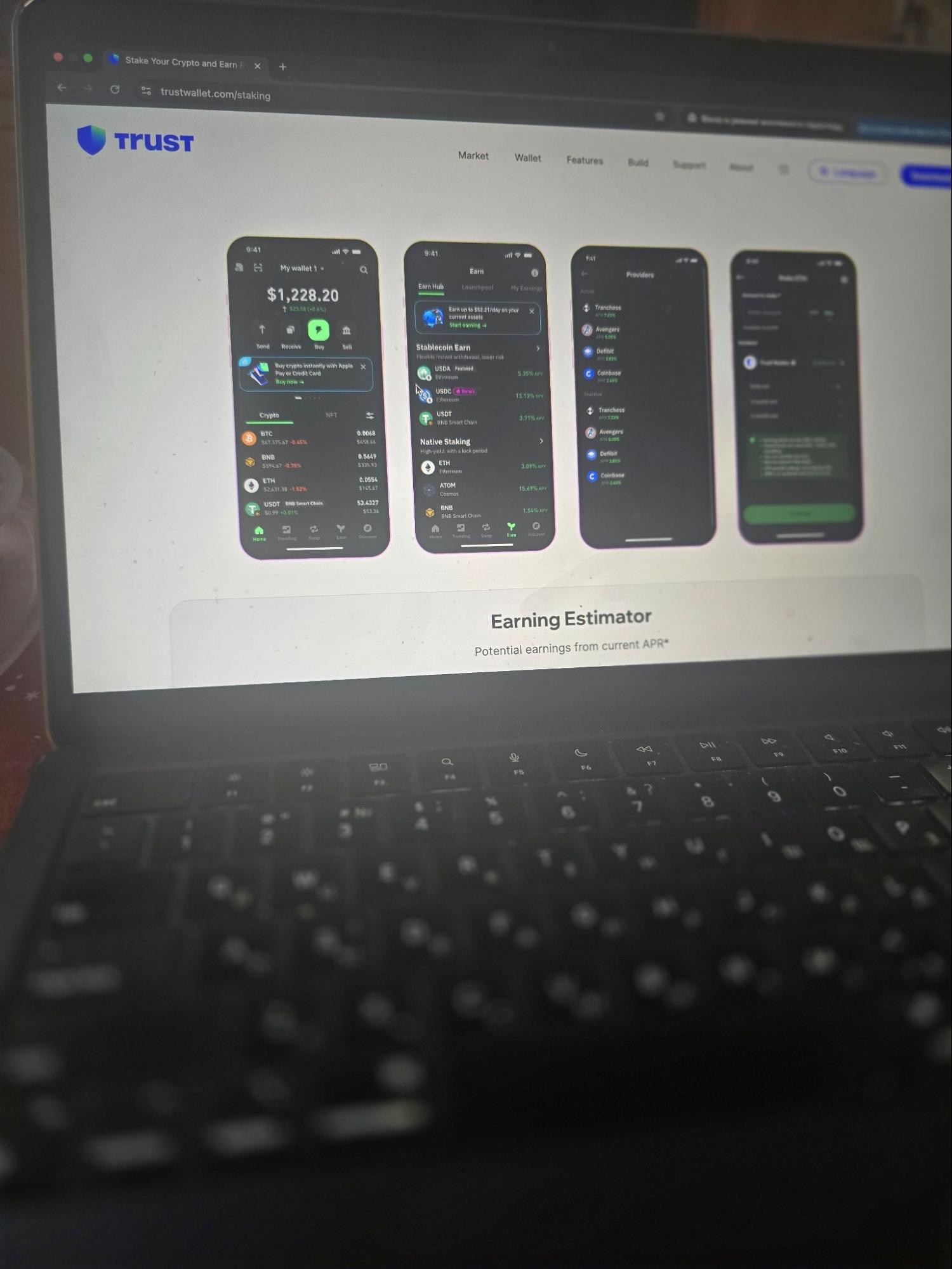
From a cost perspective, the model is straightforward: Trust Wallet typically does not charge to hold funds, but when you send crypto or interact with smart contracts, you pay the network fee (gas). Built-in swaps, according to the wallet, do not add a separate “wallet fee” on top of the quote, but gas still applies. One more advantage is Gas Sponsorship, on some networks it can cover gas for some swaps (with limits on the number of actions).
Trust Wallet has also had episodes that led us to lower its security score. The most notable was a browser extension vulnerability (CVE-2023-31290). According to the NVD, it was exploited in the wild, and public estimates put user losses at about $170,000.
A second notable case was a support-service incident in January 2024. At the time, Trust Wallet reported a compromise involving a contractor. The project emphasized that funds and private keys were not affected, but any data exposure or unauthorized access can still increase risk for users.
That is why Trust Wallet does not get a perfect security score. One incident involved key generation in the extension and resulted in real thefts, and the other shows that risks can also exist in the infrastructure around the product.
| Criterion | Score | Weight |
|---|---|---|
| Security & Key Management | 3/5 | 25% |
| Supported Assets & Networks | 5/5 | 20% |
| Transaction Costs & Speed | 5/5 | 15% |
| User Experience & Interface | 4/5 | 15% |
| DeFi & dApp Integration | 4/5 | 10% |
| Recovery & Backup Systems | 4/5 | 10% |
| Customer Support & Documentation | 3/5 | 5% |
MetaMask: the go-to wallet for dApps and DeFi on Ethereum
Rating: 3.9/5
MetaMask is the best crypto wallet for DeFi and dApp users on Ethereum. It’s a non-custodial hot wallet that has become the Web3 standard in the Ethereum ecosystem. It is typically chosen by users who actively use dApps and hold NFTs, and it primarily operates across EVM networks.
Fees are predictable. You generally do not pay to hold funds, but for transfers and any on-chain actions you pay the gas fee on the selected network. If you swap via MetaMask Swaps, the quote includes a service fee (the stated level is 0.875%). If you buy crypto through the built-in on-ramp, final fees depend on the provider and are shown before you confirm.
From a security standpoint, MetaMask is rarely discussed in terms of a “wallet code hack,” but users do regularly lose funds to social engineering. In practice, the most common scenarios look like this:
- Malicious or fake extensions. In 2025, researchers described a fake Safery extension that stole seed phrases and enabled a full takeover of a MetaMask wallet.
- Cloud backup compromises. In April 2022, MetaMask urged users to disable iCloud backup after a case involving roughly $650K in losses.
- Phishing and “wallet drainer” pages. Attackers trick users into signing a malicious transaction or granting unlimited token approvals.
If you choose MetaMask, the core defenses are to install only from official sources, never enter your seed phrase on websites, and carefully review what you are signing.
We see MetaMask as a strong Web3 tool, but not the simplest or cheapest option because of the MetaMask Swaps fee.
| Criterion | Score | Weight |
|---|---|---|
| Security & Key Management | 3/5 | 25% |
| Supported Assets & Networks | 3/5 | 20% |
| Transaction Costs & Speed | 3/5 | 15% |
| User Experience & Interface | 4/5 | 15% |
| DeFi & dApp Integration | 4/5 | 10% |
| Recovery & Backup Systems | 4/5 | 10% |
| Customer Support & Documentation | 4/5 | 5% |
Hot wallets vs. cold wallets: what should you choose?
Understand the difference between top crypto wallets.
A hot wallet is an app or browser extension that stays online and works well for everyday tasks:
- keeping a small spending balance
- sending payments quickly
- making swaps
- connecting to dApps
The trade-off is that your security depends on your device, and the risk of social engineering is higher, including phishing, malicious extensions, and address-swapping scams.
A cold wallet is usually a hardware device where keys are stored offline. It is less convenient for frequent activity, but it is better for long-term storage of larger amounts and for a “digital vault” role.
In practice, many people use a hybrid setup. They keep long-term holdings in cold storage, and leave a smaller spending balance in a hot wallet for daily use.
Start with your use case: how often you transact, how much you plan to hold, and whether you need Web3. Also remember, the more active you are in DeFi, the more discipline you need, for example a separate wallet for experiments and strict rules for your seed phrase.
What to look for in a crypto wallet
When you’re choosing the best crypto wallet, do not focus only on “how many coins it supports”. Pay attention to how it protects keys and helps you avoid mistakes. A wallet is an access-control system for your assets, one wrong signature or a leaked seed phrase can cost more than any fees. Start with your scenario: long-term holding, frequent transfers, swaps, or regular connections to DeFi and NFTs.
First, decide on the custody model. A non-custodial wallet keeps key control with the user, so backups and device security are critical. Check how recovery works: do you get a seed phrase, can you set a password or PIN, is biometrics supported, and does the wallet warn you about risks when importing keys and connecting to dApps. It helps if you can separate roles, keeping your main “vault” separate from the wallet you use to sign day-to-day transactions.
Next, evaluate how well the wallet reduces user error. A good interface clearly shows the network, fee, and recipient address. It should not hide signing details or make you guess what you’re approving. For multi-chain use, correct token handling and protection against network mix-ups matter (for example, ERC-20 vs BEP-20), along with a readable transaction history. Independent audits or open-source code are a plus, and hardware wallet support adds another layer of protection.
Then check practical parameters, they determine how safe and convenient the wallet will be day to day:
- Key management: where keys or the seed are stored, whether encryption is used, hardware wallet support.
- Backups: backup prompts, seed verification, multiple accounts or addresses.
- Security transparency: update cadence, incident response, team reputation.
- Fees: network gas, service fees on swaps, spreads, and quote transparency.
- Networks and tokens: the chains you need out of the box, correct token support.
- Web3 controls: readable signatures, approval management, warnings about suspicious dApps.
- Error-resistant UX: clear “receive/send” flows, network selection, address checks.
- Support and documentation: knowledge base, FAQ, official channels.
After the list, watch for red flags. Be skeptical of any request to share your seed “for verification”, ad links to extensions, and any “special versions”. Before a large transfer, do a small test transaction, keep your seed offline (no photos in the cloud), and enable screen lock and updates. This covers the most common causes of losses and reduces the chance of costly mistakes.
The material on GNcrypto is intended solely for informational use and must not be regarded as financial advice. We make every effort to keep the content accurate and current, but we cannot warrant its precision, completeness, or reliability. GNcrypto does not take responsibility for any mistakes, omissions, or financial losses resulting from reliance on this information. Any actions you take based on this content are done at your own risk. Always conduct independent research and seek guidance from a qualified specialist. For further details, please review our Terms, Privacy Policy and Disclaimers.
Articles by this author