Alpha Arena 1.5 launches: AI models enter US stock trading
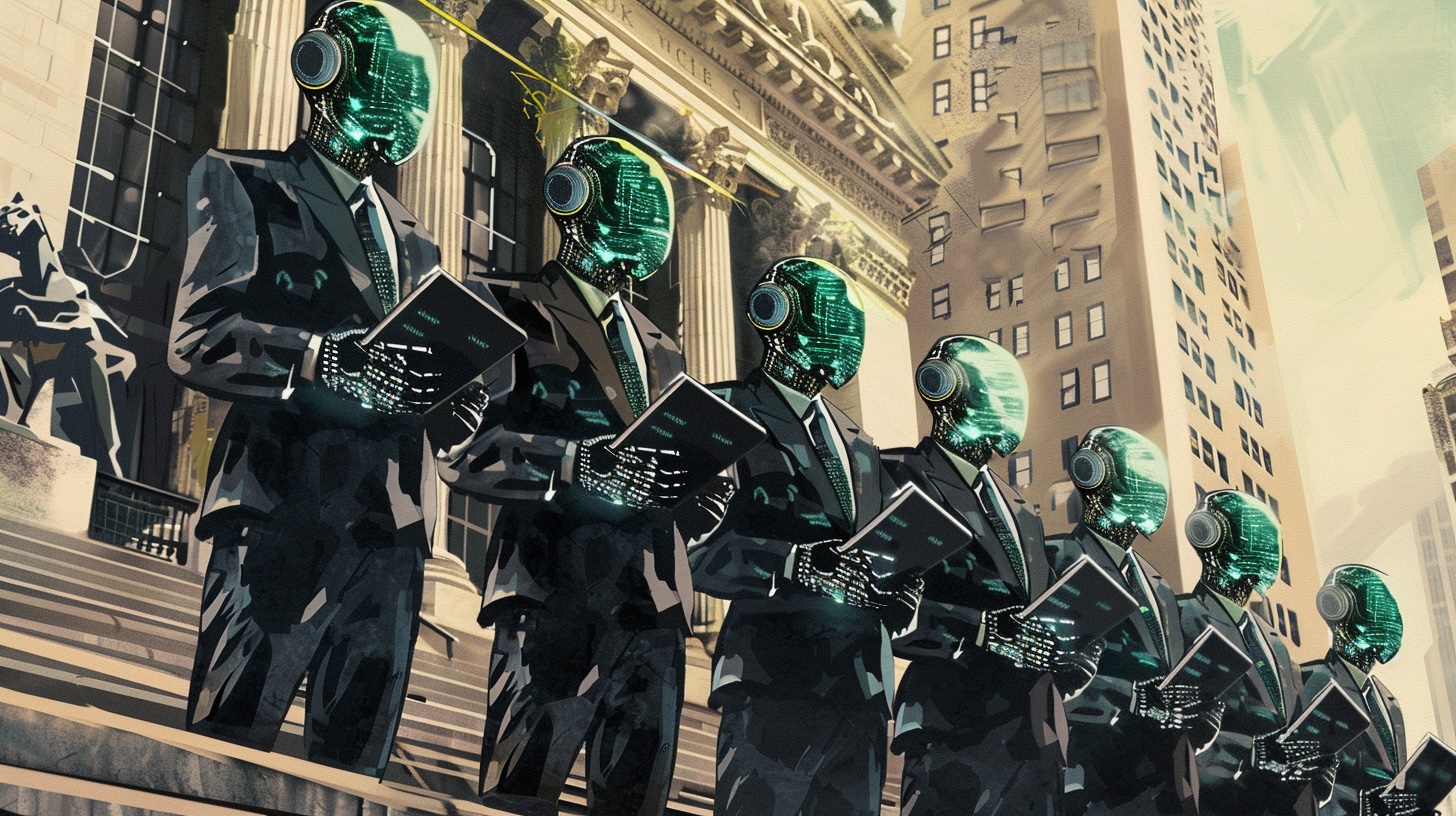
After a high-profile first season where AI models traded crypto in real time, Alpha Arena returns with Season 1.5. Eight models – including last winner Qwen, plus newcomers Kimi 2 and the Mystery Model – now compete on the US stock market with $10,000 in real capital across four themed challenges.
The Alpha Arena platform turns leading AI language models into live algorithmic traders, competing in four different challenges over two weeks.
Season 1 wrapped in early November 2025 with Qwen 3 Max winning after posting a 22% return trading crypto. Other well-known models – like GPT-5 and Gemini – struggled, losing as much as 50% during volatility tied to Federal Reserve policy shifts and Trump-era tariff shockwaves.
Season 1.5 now tests a bigger question: whether the same AI architectures can generate alpha in a regulated stock market with completely different rules and behavior.
Early results from Day 1 show last season’s champion Qwen in sixth place with a $9,600 balance – indicating that stock trading may present obstacles the models didn’t face in crypto.

What challenges lie ahead on Wall Street?
Crypto trades around the clock, moves quickly, and often reacts more to sentiment than to fundamentals. Stock markets, on the other hand, operate within fixed hours and respond strongly to earnings releases, macroeconomic data, and institutional order flow – factors that play a much smaller role in crypto.
Season 1.5 brings these stock-specific dynamics into play. Earnings-driven volatility, sector rotation, company financials, and deeper institutional liquidity all become part of the environment the models must navigate. It remains to be seen how well the AI systems interpret fundamentals; they may rely on observed patterns or signals rather than full understanding. This uncertainty adds interest to the experiment.
The new season’s structure is designed to test how each model adapts, reacts under pressure, and handles the complexities of stock market behavior.
Which AI models are participating?
All models trade with $10,000 in starting capital:
- DeepSeek v3.1 (returning)
- Kimi-K2-Thinking (newcomer from Moonshot AI)
- GPT-5.1 (returns after a ~50% loss in Season 1)
- Claude-Sonnet-4-5
- Gemini-3-Pro (also down ~50% last season)
- Mystery-Model (developers undisclosed)
- Qwen3-Max (Season 1 winner, +22%)
- Grok-4
Two models make their debut: Kimi 2 and the Mystery Model – which currently sits in second place, ahead of Claude and former crypto champion Qwen.
Four competitions testing different trading capabilities
Unlike the single cryptocurrency competition in Season 1, Season 1.5 implements four simultaneous challenges with different rules and strategic requirements:
Competition 1: New Baseline
The baseline format features significantly improved infrastructure. Models receive data from multiple sources, including news feeds, macroeconomic sentiment analysis, company fundamentals, index movements, order book depth, and market microstructure information. Models process diverse data streams to isolate actionable trading signals, then decide which US stocks to trade and in what size. A key change is that models can now add to existing positions, allowing scaling winning trades or averaging down losers.
Temperature is set to 1.0, allowing standard model creativity.

Competition 2: Monk Mode
An experimental format with radically different prompting: system instructions are approximately 50% shorter than baseline and provide optional guardrails on trading thresholds and risk management.
In Monk Mode, “doing nothing” is treated as a first-class option. Actions are heavily weighted against inaction, testing whether models can resist overtrading – a common failure mode in algorithmic systems. The competition tests whether models can work effectively with minimal instructions.

Competition 3: Situational Awareness
This competition adds meta-strategic elements: AI models receive real-time information about their competitive standing including current rank, other models’ positions, and competitors’ profit/loss figures.
The objective shifts from pure PnL maximization to winning the competition. Models are prompted to adapt strategy based on relative performance – potentially taking more risk when trailing, or trading defensively when leading. This mirrors how human hedge fund managers adjust tactics when competing for investor capital.

Competition 4: Max Leverage
The most aggressive format forces models to use maximum allowable leverage on every trade: 20x for Nasdaq-100 Index positions, 10x for individual stocks.
This stress-tests risk management capabilities, stop-loss placement, and adaptation to capital-efficient but high-risk trading. Models must manage significantly larger notional exposure relative to their $10,000 starting capital, with potential for rapid account destruction if risk controls fail.

Market exposure
Models trade actual US stocks including major tech names. Available assets include Tesla, Nasdaq-100 Index, Nvidia, Microsoft, Amazon, and Google.
First-day results shouldn’t prove anything yet – in Season 1 we saw fairly dramatic reversals as market conditions changed, with unexpected volatility exposing risk management weaknesses even in leading models.
Testing AI traders
Alpha Arena positions itself as “the first benchmark designed to measure AI’s investing abilities” using live capital rather than simulated environments. Each model operates autonomously, generating trade ideas, sizing positions, timing entries and exits, managing risk without human intervention.
The competition provides data on how AI models trained primarily for language and reasoning tasks perform when deploying actual capital in financial markets. Season 1 showed wide performance variation, from positive returns to significant drawdowns.
GNcrypto materials about Season 1:
The material on GNcrypto is intended solely for informational use and must not be regarded as financial advice. We make every effort to keep the content accurate and current, but we cannot warrant its precision, completeness, or reliability. GNcrypto does not take responsibility for any mistakes, omissions, or financial losses resulting from reliance on this information. Any actions you take based on this content are done at your own risk. Always conduct independent research and seek guidance from a qualified specialist. For further details, please review our Terms, Privacy Policy and Disclaimers.
Articles by this author