AI models favor Bitcoin and stablecoins over fiat: BPI study
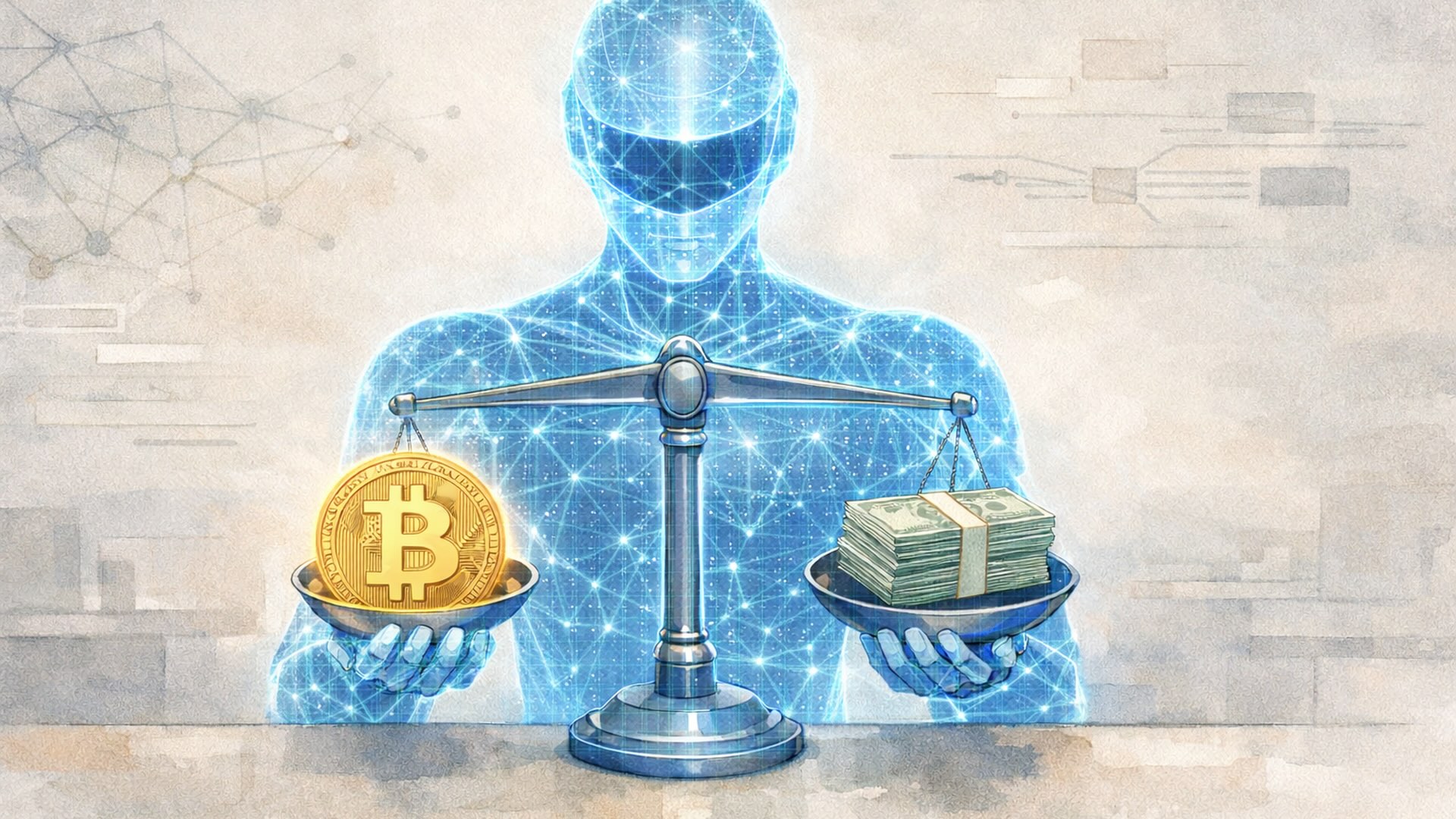
Across 9,072 tests, 36 AI models chose Bitcoin 48.3% overall and 79.1% for store of value, while stablecoins led payment tasks at 53.2%, a Bitcoin Policy Institute study found.
The Bitcoin Policy Institute (BPI) published findings from a study that tested 36 frontier AI models from Anthropic, DeepSeek, Google, MiniMax, OpenAI, and xAI across 9,072 open-ended monetary scenarios. Models were asked to select a monetary instrument for four functions: store of value, unit of account, medium of exchange, and settlement. Across all responses, Bitcoin was chosen 48.3% of the time (4,378 of 9,072), stablecoins 33.2% (3,013), and fiat currencies 8.9%.
Preference for Bitcoin strengthened in multi-year store-of-value questions, where it received 79.1% of selections (1,794 of 2,268). Stablecoins accounted for 6.7% and fiat for 6% in those cases.
In payment scenarios covering services, micropayments, and cross-border transfers, stablecoins led with 53.2% of responses, followed by Bitcoin at 36% and fiat at 5.1%. The pattern held across developers, model sizes, and output settings, according to the institute.
Overall, 90.8% of substantive responses favored digitally native instruments-such as Bitcoin, stablecoins, other crypto assets, tokenized real-world assets, and compute units-while fiat accounted for 9.2%. None of the 36 models ranked fiat as the top overall choice.
Outcomes varied by developer. Anthropic’s models averaged a 68% Bitcoin preference, with Claude Opus 4.5 at 91.3%, the highest among individual models. DeepSeek averaged 52%, Google 43%, and xAI 39%. OpenAI models averaged 26%, with GPT-5.2 at 18.3%.
The institute logged 86 cases in unit-of-account scenarios where models proposed energy or compute-based measures, such as kilowatt-hours and GPU-hours, as a way to denominate value. These responses were not prompted by the study design.
The report referenced a separate global survey of freelancers and sellers indicating that about 35% of annual earnings are now paid in stablecoins, and that nearly three-quarters of respondents saw improved ability to work internationally with stablecoin payments.
The institute said the models, even without guidance, tended to settle on a two-tier setup: Bitcoin for saving and stablecoins for everyday spending, echoing how hard reserves and liquid payment tools have worked historically. It added that as AI agents begin making more economic decisions on their own, these preferences could carry direct policy implications.
The scenarios were structured without suggested currencies or predetermined answers to reduce bias, and results were tallied across thousands of outputs to capture recurring patterns.
The material on GNcrypto is intended solely for informational use and must not be regarded as financial advice. We make every effort to keep the content accurate and current, but we cannot warrant its precision, completeness, or reliability. GNcrypto does not take responsibility for any mistakes, omissions, or financial losses resulting from reliance on this information. Any actions you take based on this content are done at your own risk. Always conduct independent research and seek guidance from a qualified specialist. For further details, please review our Terms, Privacy Policy and Disclaimers.
Articles by this author