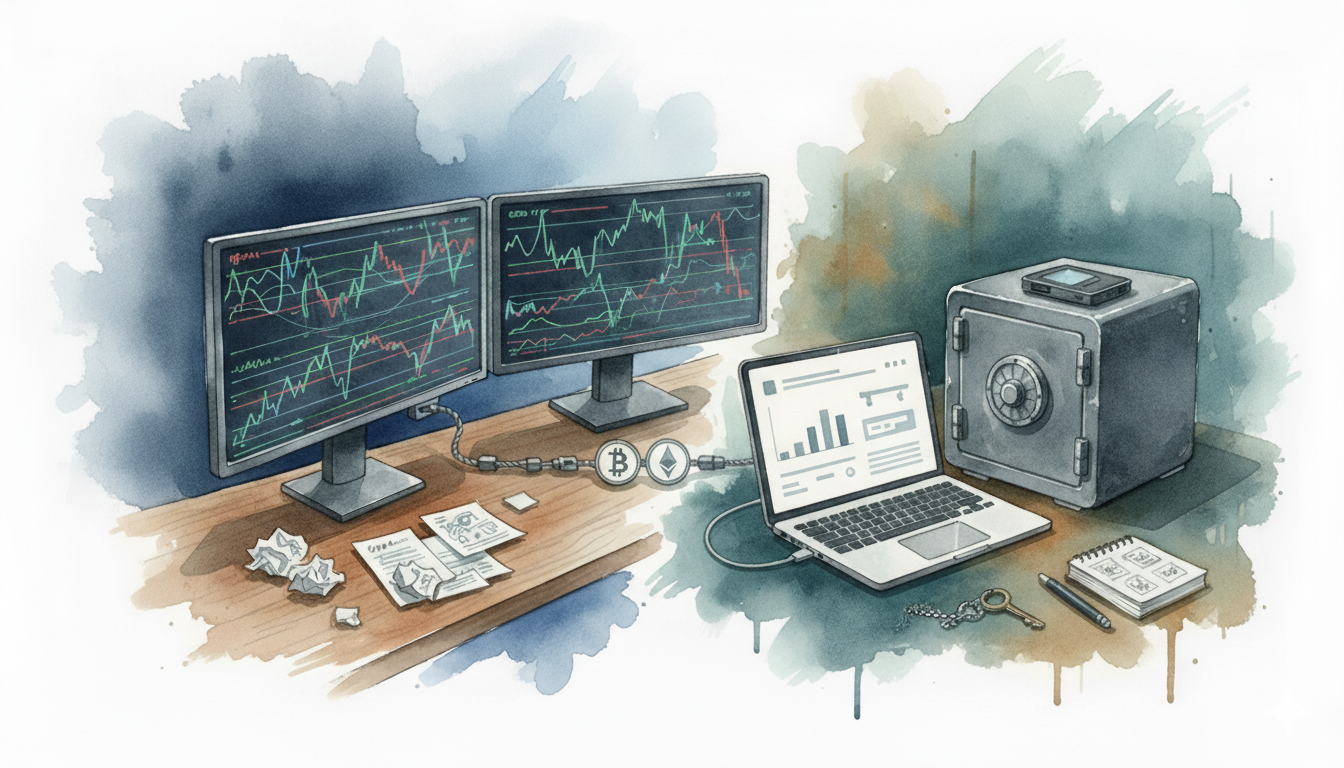
Why is Bitcoin worth so much? A clear, no‑hype guide

Bitcoin’s value comes from engineered scarcity, neutral settlement, and growing adoption. This guide answers why is Bitcoin valuable with clear, non‑hype explanations: how fixed supply, Proof‑of‑Work security, regulation, liquidity, and market structure interact to sustain demand. Read on for the core factors, key drivers, and real‑world dynamics.
On this page
Why Does Bitcoin Have Value?
Bitcoin has value for the same reason any monetary good does: participants expect others will accept it tomorrow; today’s system properties justify that expectation. Instead of resting on an issuer’s credibility, Bitcoin’s assurances come from open‑source rules that anyone can verify: a public ledger, thousands of independently run nodes, and a transparent issuance schedule capped at 21 million. Because no single actor can arbitrarily change those rules, holders can forecast dilution risk with unusual certainty.
Utility is immediate. With a phone and an internet connection, anyone can custody and transfer value worldwide, outside banking hours and without gatekeepers. Settlement depends on cryptographic proofs rather than a counterparty’s promise, which makes Bitcoin particularly useful in places with capital controls or fragile financial rails.
Security is purchased with energy via Proof‑of‑Work. Miners expend real resources to add blocks; rewriting history would require outspending the honest network. That economic cost makes confirmed transactions extremely hard to reverse and gives the base layer strong finality: enough for treasuries, custodians, and payment firms to integrate on‑chain settlement into operations.

Monetary traits reinforce the case: portability (keys move value across borders in minutes), divisibility (100 million satoshis per bitcoin enable micro‑payments and precise pricing), and verifiability (full nodes check every rule, minimizing trust). In effect, Bitcoin reproduces the monetary advantages of gold in digital form, with superior auditability and transfer speed.
Network effects compound value. Each additional user, developer, exchange, or service improves liquidity and tooling and raises switching costs. Years of uptime and predictable behavior increase confidence the system will keep working (the Lindy effect) encouraging longer holding horizons and more professional infrastructure.
Put simply: if you’re wondering why does Bitcoin have value, it’s because market price reflects engineered scarcity, credible settlement, and global accessibility – properties that let Bitcoin function as a store of value and neutral settlement network without relying on an issuer.
One way to see that value is by comparing settlement assurances. A cross‑border wire may clear in hours yet be reversed days later; a bitcoin payment confirmed in several blocks becomes economically irreversible unless an attacker outspends the network.
Treasurers apply this to operations: keep small working balances on faster layers for payments, then consolidate to the base chain for durable finality. In remittance corridors facing capital controls or weak banking, being able to self‑custody and route value with only the internet removes intermediary risk entirely. Relative to gold, verification and transport costs collapse: a full node on commodity hardware audits total supply and incoming funds, while keys can be sharded or placed in multisig to approximate institutional‑grade custody.
Understanding the Claim That Bitcoin Is ‘Backed by Nothing’
“Backed by nothing” sounds damning, but it mostly reflects confusion about how modern money works. Most national currencies are no longer redeemable for gold; their value rests on legal tender status, tax obligations, and confidence in the issuer. Bitcoin removes the issuer. Instead of an institution’s promise, it relies on rules that any participant can verify and no single party can change arbitrarily.
So what exactly “backs” Bitcoin? Several elements combine to create credibility: scarcity, security, auditability, portability and divisibility.
This is a different kind of backing. There is no asset in a vault and no balance‑sheet liability promising redemption at par. Instead, the network’s assurances (scarcity that won’t be diluted, settlement that is difficult to reverse, and verification that requires no permission) create base utility. Markets then layer on a monetary premium because people expect others will accept Bitcoin in the future.
Common objections arise from this framing.
Volatility reflects young, global price discovery for an asset with inelastic supply; it tends to moderate with deeper liquidity and wider distribution.
Energy use is the cost of credible neutrality; miners naturally seek the cheapest power, often stranded or excess. Concentration risk is visible on‑chain, and ownership disperses as compliant access and institutional liquidity grow.
In short, Bitcoin isn’t “backed by nothing.” If you’re asking why is Bitcoin valuable, it’s because the network is anchored by code‑enforced rules, strong economic incentives, and a large, persistent community willing to enforce them in the open.
The “nothing backs it” critique also misreads redemption versus credibility. Bitcoin offers no promise of conversion into a fixed asset; credibility stems from a costly‑to‑change ledger and an issuance schedule no administrator can accelerate. The security budget (subsidy plus fees) purchases defense against history rewrites, while public validation lets anyone verify both total issuance and personal balances.
That places Bitcoin closer to a monetary commodity whose usefulness comes from hardness and neutrality, not a corporate balance sheet. Production cost doesn’t set price, but it does raise the hurdle for sustained attacks: adversaries must burn real resources. If consensus fractured, the premium would fade. So the thesis remains testable in uptime, node count, client diversity, and fee market health over time.
Factors That Sustain Bitcoin’s Worth
Bitcoin’s long‑run value is sustained by a stack of technical, economic, and social factors that reinforce one another. Together they minimize dilution risk, harden settlement, and widen real‑world usefulness.
- Programmed scarcity. A transparent, non‑discretionary issuance schedule with a terminal cap of 21 million prevents policy‑driven debasement and lets savers forecast supply with precision.
- Security and finality. Proof‑of‑Work ties block history to real‑world energy costs. Rewriting deep history is prohibitively expensive, which makes confirmed transactions hard to reverse.
- Credible neutrality. No central operator can censor, inflate, or privilege counterparties. Thousands of independently run nodes enforce the same rules, preserving equal access globally.
- Self‑custody and censorship resistance. Users can hold keys directly, avoiding single‑point counterparty risk and enabling cross‑border value transfer without intermediaries.
- Global liquidity and infrastructure. Exchanges, custodians, prime brokers, and payment processors deepen order books, tighten spreads, and integrate Bitcoin into consumer and institutional workflows.
- Regulatory guardrails. Clearer rules (licensing, disclosures, tax treatment, AML) reduce frictions for compliant participation, expanding the addressable market and supporting durable demand.
- Network effects and Lindy. More users, developers, and merchants increase utility and switching costs. Each additional year of uptime lengthens perceived future lifespan, reinforcing holding behavior.
- Transparency and auditability. Anyone can verify total supply, ownership changes, and rule compliance by running a node, reducing information asymmetry and the need to trust intermediaries.
- Layered scalability. Payment channels, batched settlement, and emerging second‑layer solutions improve speed and cost without compromising the base layer’s security guarantees.
- Energy market alignment. Miners naturally seek the cheapest power (often stranded or flexible), translating low‑cost energy into ledger security and encouraging operational efficiency.
These factors don’t eliminate volatility, but they keep the network useful, predictable, and credible – conditions under which a monetary premium can persist. If you’re wondering why is Bitcoin worth so much, the durable combination of engineered scarcity, credible settlement, and expanding, regulated market access explains why markets assign a persistent premium over base utility.
Main Drivers of Bitcoin’s Value
If you’re asking what makes Bitcoin valuable, day‑to‑day price reflects flows and expectations layered on a fixed supply.
The main drivers are:
- Programmed scarcity & halvings. Issuance declines on a known schedule; supply shocks meet changing demand.
- Adoption & network effects. Growth in users, developers, merchants, and L2s increases utility, liquidity, and switching costs.
- Liquidity & market access. Regulated spot products, prime brokerage, and reliable custody widen participation and tighten spreads.
- Macro regime. Fed rates, dollar strength, liquidity conditions, and risk appetite set the backdrop for all risk assets.
- Regulation & policy signals. Clear rules unlock compliant demand; restrictive actions and tax frictions can dampen it.
- Miner economics & security. Power prices, difficulty, and hashrate influence miner selling and the network’s credibility.
- Derivatives positioning. Funding, basis, options skews, and liquidation cascades can magnify both rallies and drawdowns.
- On‑chain supply dynamics. Exchange balances, long‑term holder supply, and realized cost bases indicate absorption versus distribution.
- Narrative catalysts & tech progress. Payments integrations, treasury usage, country‑level pilots, better wallets and scaling improve perceived utility.
Together these forces turn fixed supply into changing prices; over time, adoption and credible security sustain the premium.

The Role of Market Dynamics in Bitcoin and Other Cryptocurrencies
Bitcoin’s price is discovered inside a 24/7 global arena where spot and derivatives venues feed back into each other. Depth of order books, the cost of leverage, and the distribution of liquidity across exchanges shape how quickly information becomes price. Because BTC is the most liquid asset in the sector, its moves set the tone: confidence and capital typically flow into Bitcoin first, then rotate into higher‑beta coins as risk appetite expands, and retreat back to BTC and stablecoins when conditions tighten.
If you’re asking how is Bitcoin valued, it’s through continuous, global price discovery across these venues, where marginal trades reflect liquidity, leverage, and information flow.
Leverage accelerates these cycles. In bull phases, positive funding and crowded longs can push prices above fundamentals until a shock triggers liquidations; in stress, cascading margin calls and thin books amplify the downside. Options markets influence spot via hedging flows: rising implied volatility can force dealers to buy or sell into moves, steepening trends. Stablecoins function as settlement currency and dry powder; expansions in their supply often coincide with improved liquidity, while contractions can signal risk reduction.
Macro and policy spill into crypto through multiple channels: interest‑rate expectations, dollar strength, and regulatory headlines alter the cost of capital and the breadth of participation. Structural flows matter too: ETF creations and redemptions, miner selling to cover operating costs, treasury rebalancing, and exchange inventory changes can all tilt supply demand near the margin. Time‑zone effects and event clusters (funding resets, economic data releases, protocol upgrades) create predictable windows of volatility.
Across the wider market, dispersion is the rule. Alternative cryptocurrencies trade as leveraged bets on sector growth but carry idiosyncratic risks in governance, tokenomics, and technology. Bitcoin’s conservative roadmap and credible neutrality make it the bellwether; others wax and wane around it. Understanding these dynamics helps separate short‑term swings from the long‑term thesis: liquidity and leverage drive the noise, while adoption and security sustain the signal.
The material on GNcrypto is intended solely for informational use and must not be regarded as financial advice. We make every effort to keep the content accurate and current, but we cannot warrant its precision, completeness, or reliability. GNcrypto does not take responsibility for any mistakes, omissions, or financial losses resulting from reliance on this information. Any actions you take based on this content are done at your own risk. Always conduct independent research and seek guidance from a qualified specialist. For further details, please review our Terms, Privacy Policy and Disclaimers.
Articles by this author