Custodial vs non custodial wallet in 2026: key differences and use cases
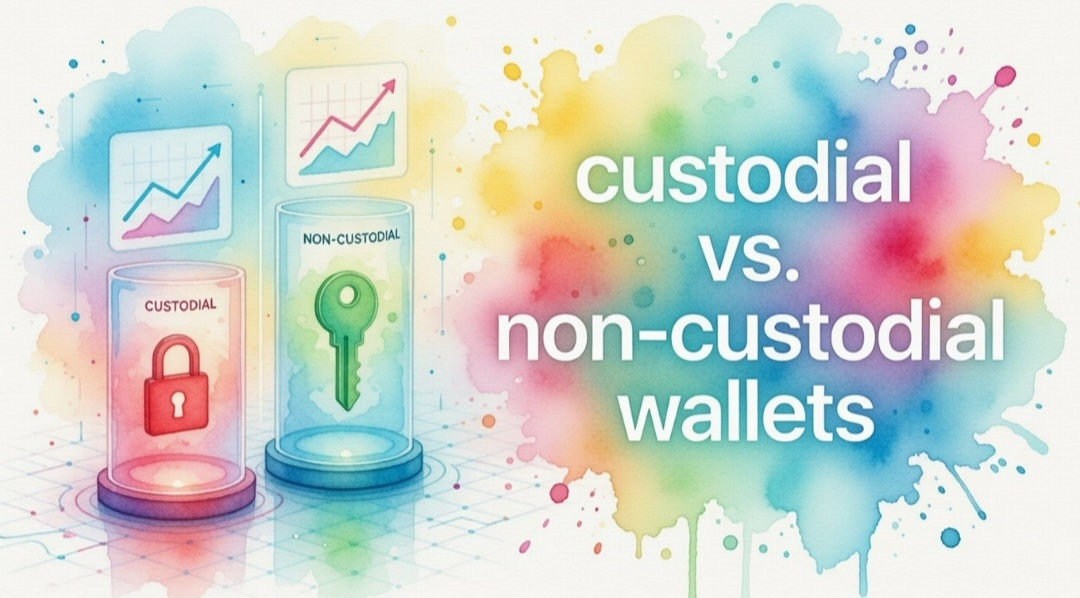
Custodial and non-custodial wallets solve different problems: convenience versus control. This guide explains who holds the keys, what happens if you lose access, and when a hybrid setup makes sense. Learn the quick decision rules beginners use to store crypto safely without overcomplicating it.
On this page
Custodial vs non-custodial wallets: quick overview
Here is the rule that clears up most confusion: if you do not control the private keys, you do not fully control the crypto. A wallet is basically the tool that controls those keys and signs transactions.
A custodial wallet means a service holds the keys for you. Think of an exchange account: you log in with email, password, and 2FA, and the provider can help you recover access if you forget something. The tradeoff is trust. Your funds depend on the provider staying solvent, secure, and willing to process withdrawals.
A non-custodial wallet means you hold the keys yourself, usually via a seed phrase. No company can freeze your wallet or reset your password, which is great for control but brutal if you lose that seed. In self-custody, you are the support desk.
How it feels in real life:
- Control: custodial is shared with a provider; non-custodial is fully yours.
- Recovery: custodial can reset access; non-custodial cannot recover a lost seed.
- Speed: custodial is fast for trading and recurring buys; non-custodial is built for holding and on-chain use.
- DeFi access: custodial is limited; non-custodial connects directly to apps, which is why many users compare the best crypto wallets before getting started
- Risk profile: custodial adds counterparty risk; non-custodial adds user-error risk.
- Account limits: custodial can face KYC blocks or withdrawal holds; non-custodial cannot, but you can still make irreversible mistakes.
Typical beginner scenarios are straightforward. If you are buying small amounts, want simplicity, and may need password recovery, custodial can be a practical starting point. If you plan to hold long-term, use DeFi, or want maximum control, non-custodial is usually the better fit. When people compare a custodial wallet vs non custodial wallet, the real difference is who holds the keys and who carries the consequences.
When to use custodial vs non-custodial wallets
The best wallet choice depends on what you are actually doing, not on ideology. A custodial vs non custodial wallet decision is usually about convenience versus control, and most beginners end up using both at different times.
Custodial wallets make sense when you want a smooth, familiar experience. If you are buying small amounts, setting up recurring buys, or trading often, an exchange-style wallet is fast and forgiving. Password recovery exists, customer support can help with account access, and you can move between fiat and crypto without juggling networks and signatures every day. Custody also fits users who prefer clear compliance and reporting, or who are simply not ready to protect a seed phrase.
The tradeoff is counterparty risk and platform rules. A custodial provider can pause withdrawals, apply KYC checks, or limit certain transfers. The painful real-world reminder is FTX in 2022: when a custodian fails, users cannot just take their private keys and walk away. An older historical example is Mt. Gox in 2014, which became the original lesson for many early adopters that keeping everything on one exchange can go very wrong. That is also why choosing the best crypto exchange matters from the start.
Non-custodial wallets are the better fit when control matters more than convenience. Long-term holding is the obvious case: you are not actively trading, so you may prefer to keep assets in your own vault. Self-custody is also the default for DeFi. If you want to use a DEX, lend, farm, claim on-chain rewards, or interact with tokenized apps, you will need a wallet that can connect directly.
But self-custody has its own hard edge: there is no password reset. The simplest non-custodial failure case is losing the seed phrase. If that happens, funds are typically gone forever. Add phishing, fake wallet popups, and wrong network transfers, and the risk becomes human error, not company risk.
A beginner-friendly setup is hybrid. Keep a smaller spending balance in a custodial account for buying, selling, and short-term activity. Keep your long-term holdings in a non-custodial wallet you treat like a safe. Whichever path you choose, the rule is the same: match your wallet type to your behavior, and size your balances so one mistake does not become a life lesson.
Final verdict: which wallet type fits you best?
There is no single best wallet for everyone. The best choice is the one that matches your behavior and your risk tolerance.
If you want the simplest setup for small balances, a custodial wallet is often the right starting point. It is easier to recover access, easier to buy with fiat, and easier to trade quickly. Just do not treat it like a long-term vault.
If you want maximum control, long-term holding, or DeFi access, a non-custodial wallet is usually the better fit. You control the keys and can connect directly to on-chain apps, but you also carry the responsibility for backups and security.
If you want the most practical beginner setup, use both. Keep a spending and on-ramp balance on a reputable custodial platform, and move long-term holdings to self-custody like you would move savings into a safe. This approach makes even more sense if you already understand cold wallet vs hot wallet storage.
A quick decision checklist:
- Can you store a seed phrase safely and avoid phishing links?
- Do you need DeFi apps, DEX swaps, or on-chain rewards?
- Do you value account recovery and customer support?
- How large is the balance, and how long will you hold it?
The final warning is simple. Custodial failures look like business and counterparty risk, as history showed with FTX and Mt. Gox. Non-custodial failures are usually human error: lost seeds, bad approvals, and fake sites. If you remember that tradeoff, choosing non custodial vs custodial wallet becomes much easier.
The material on GNcrypto is intended solely for informational use and must not be regarded as financial advice. We make every effort to keep the content accurate and current, but we cannot warrant its precision, completeness, or reliability. GNcrypto does not take responsibility for any mistakes, omissions, or financial losses resulting from reliance on this information. Any actions you take based on this content are done at your own risk. Always conduct independent research and seek guidance from a qualified specialist. For further details, please review our Terms, Privacy Policy and Disclaimers.
Articles by this author