WhiteBIT CEO: Europe's crypto market will hit $20 billion

The crypto market could reach $20 billion by 2030. This view was voiced by WhiteBIT founder Volodymyr Nosov at the CAPITAL MARKETS CONFERENCE 2025 in Zagreb, which also featured deputy prime ministers from Croatia and Slovenia.
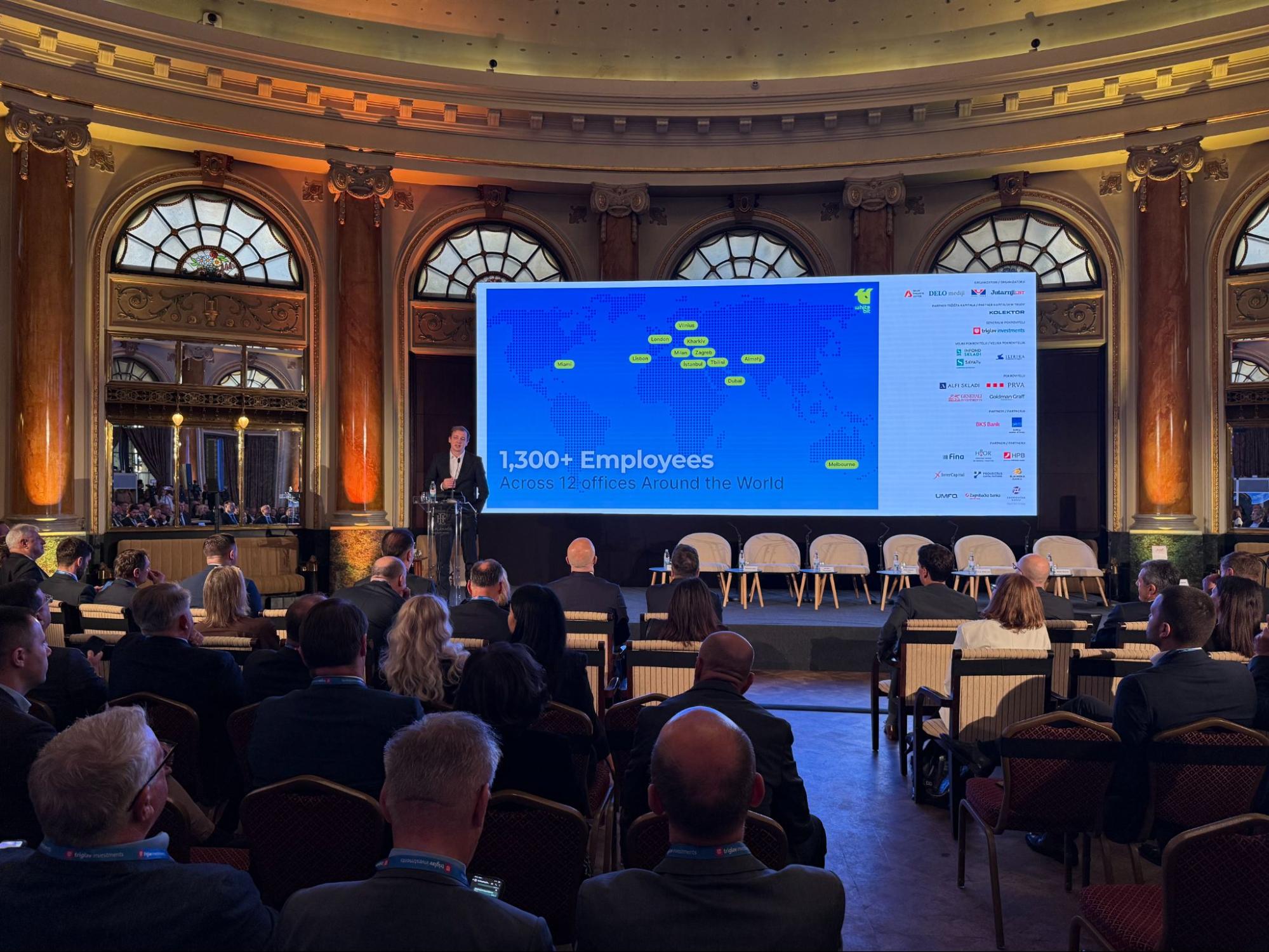
WhiteBIT CEO Volodymyr Nosov spoke as one of the featured speakers at CAPITAL MARKETS CONFERENCE 2025, sharing the panel with Marko Primorac, Deputy Prime Minister and Minister of Finance of Croatia, and Klemen Boštjančič, his counterpart from Slovenia. Also present were Ivan Gažić, CEO of the Zagreb Stock Exchange, and several financial institution heads.
-f1kD6LPW.jpg)
-AzwA6kCK.png)
The main topic was digital assets and how they fit into the economic strategy of the Balkan region. The event showed that local governments now view cryptocurrencies as more than just a retail trend.
European market growth forecasts
Nosov presented projections that notably caught attention in the room. According to his estimates, the European crypto market, currently valued at $7–10 billion, is on track to double by 2030, with the potential to reach $18–20 billion. This would translate to annual growth of 16–20%, and Croatia and Slovenia are riding this wave.
Croatia's market nearly doubled in two years, jumping from $3.3 million in 2023 to $6.1 million in 2024. These figures are expected to exceed €14.8 million in 2025. Around 200,000 people in Croatia currently use digital assets, with another 100,000 in Slovenia. In absolute terms, these are modest numbers, but enough to impact mid-sized economies.
New EU regulations open up even more opportunities for businesses and state institutions,Nosov said during the panel.
He also pointed to broader adoption signals:
- global crypto market capitalization reached $4 trillion (up 70% year-over-year, per CoinGecko),
- 600 million people worldwide hold digital assets,
- 137 countries are developing or testing central bank digital currencies.
Ljubljana ranked as leading crypto hub
Slovenia received recognition for another reason: its capital, Ljubljana, ranked first globally in a 2025 survey of crypto-friendly cities, surpassing Hong Kong and Zurich. The ranking reflects regulatory clarity, infrastructure, and openness to blockchain experimentation – factors that matter when exchanges and funds decide where to set up shop.
More stock exchanges are moving onto blockchain rails, and governments are consistently shifting their attitude toward cryptocurrencies from "speculative sideshow" to strategic tool.
Volodymyr Nosov put it simply:
The crypto industry is not just growing – it is becoming an integral part of the global economy.
Separately, WhiteBIT CMO Alex Kozenko recently shared a similar thought with us. Read his full exclusive interview for GNcrypto portal.
Private capital and household savings
One panel was dedicated to how households can preserve savings when inflation and geopolitical uncertainty reduce the attractiveness of traditional deposits. Forum experts discussed the importance of diversified portfolios, government bonds for retail investors, and individual financial accounts as alternatives to bank products.
Another session focused on mobilizing private capital for regional infrastructure – energy projects, green transitions, digital upgrades. Discussions covered public-private partnership models, project bond issuance, partial privatization of state-owned companies, and joint Croatian-Slovenian participation in European funding programs.
The presence of the CEO of Europe's largest crypto exchange by traffic alongside deputy prime ministers of democratic economies signals that digital assets are no longer confined to fintech circles.


Recommended