USA speeds up grid access for AI centres and Bitcoin mining
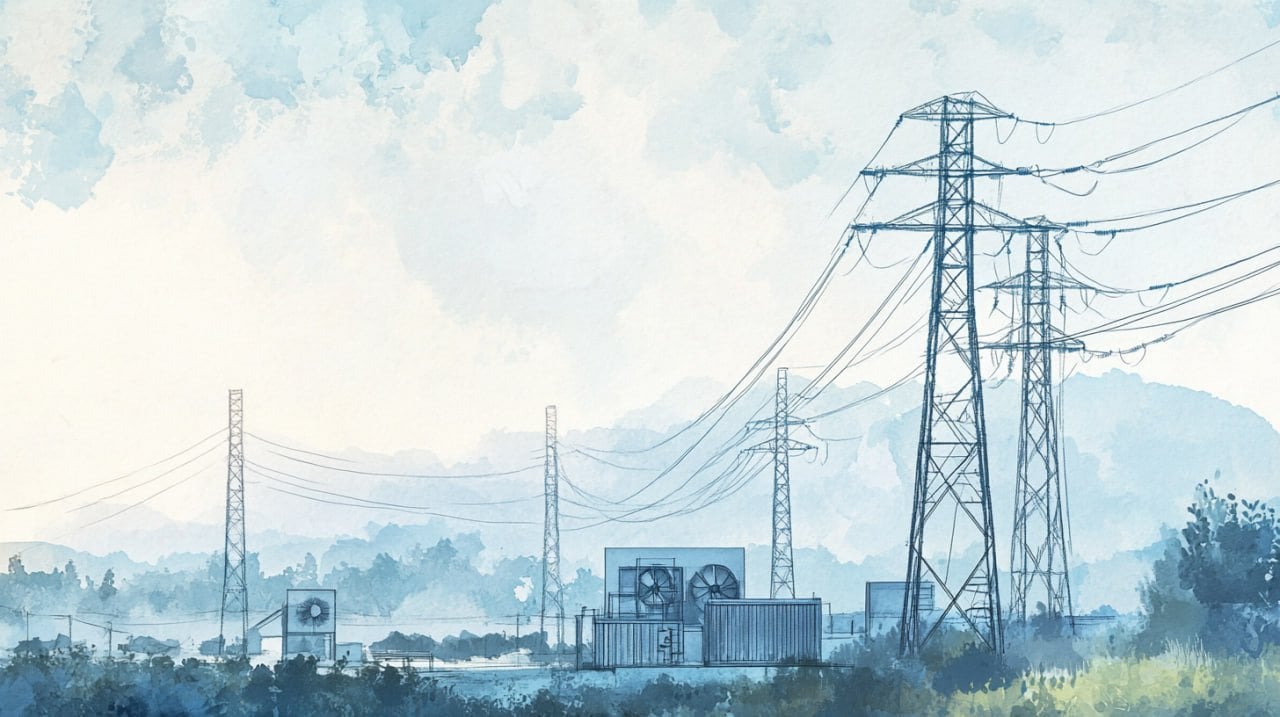
The U.S. Department of Energy (DOE) has sent a letter to the Federal Energy Regulatory Commission (FERC) proposing the development of rules for connecting large electricity users to interstate transmission lines. The focus is on loads above 20 MW, primarily AI data centres and crypto‑mining sites.
New rules aim to clear long‑standing bottlenecks in transmission interconnection and to standardise procedures, including fast‑track reviews for projects willing to accept managed load curtailment and/or operate as hybrid sites adjacent to power plants.
One concept under discussion is a target of roughly 60 days for the technical‑economic assessment and decision on eligible applications, far faster than today’s multi‑year waits many data‑centre projects face at the distribution level.
Electricity demand in the U.S. and globally is accelerating driven by AI infrastructure and crypto mining. International estimates suggest data‑centre consumption multiplying by 2030, while U.S. forecasts flag record demand already in 2025–2026. Against this backdrop, FERC revamped generator interconnection queues in 2023 (Order No. 2023), yet clear, uniform rules for connecting large loads remain absent. DOE now proposes to fill that gap and has asked the regulator to complete the work forward by 30 April 2026.
The proposal outlines several elements:
- recognition of FERC’s jurisdiction over direct connections of large consumers to interstate transmission systems;
- standardised contracts and procedures for large‑load interconnection, including direct collaboration with generation assets;
- priority and expedited processing for consumers willing to be dispatch‑curtailed;
- cost‑sharing for necessary network upgrades, with options to finance or credit those costs;
- preservation of reliability obligations and system‑operator approvals.
For mining operations, this could open quicker access to high‑voltage transmission where flexible demand can be integrated more easily. For AI operators, it provides a pathway to site mega‑projects beyond constrained distribution grids and to secure long‑term power arrangements.
Taken together, the approach could ease competition for scarce ‘green’ electrons between miners and AI projects by shifting the focus to joint capacity planning and co‑location with new generation.


Recommended