DDoS battlefield shifts – tech leads, gaming slips to #2

The technology industry now leads in distributed denial-of-service attacks, overtaking gaming, as attack volume and scale rise sharply in early 2025.
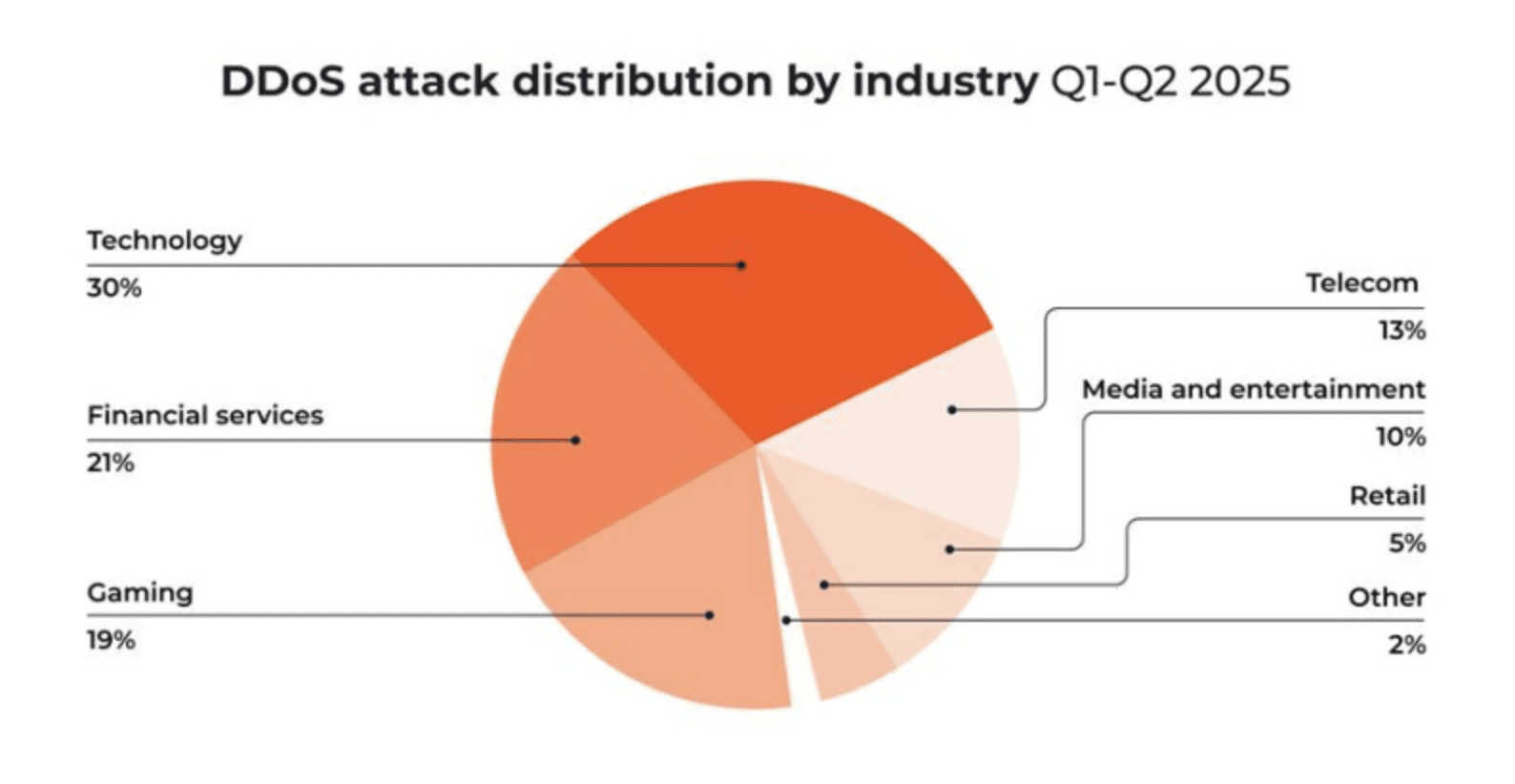
A Gcore Radar report shows technology businesses have become the most attacked sector, accounting for 30% of DDoS incidents in Q1-Q2 2025, while gaming's share dropped to 19%. Total attack volume increased 41% year-on-year.
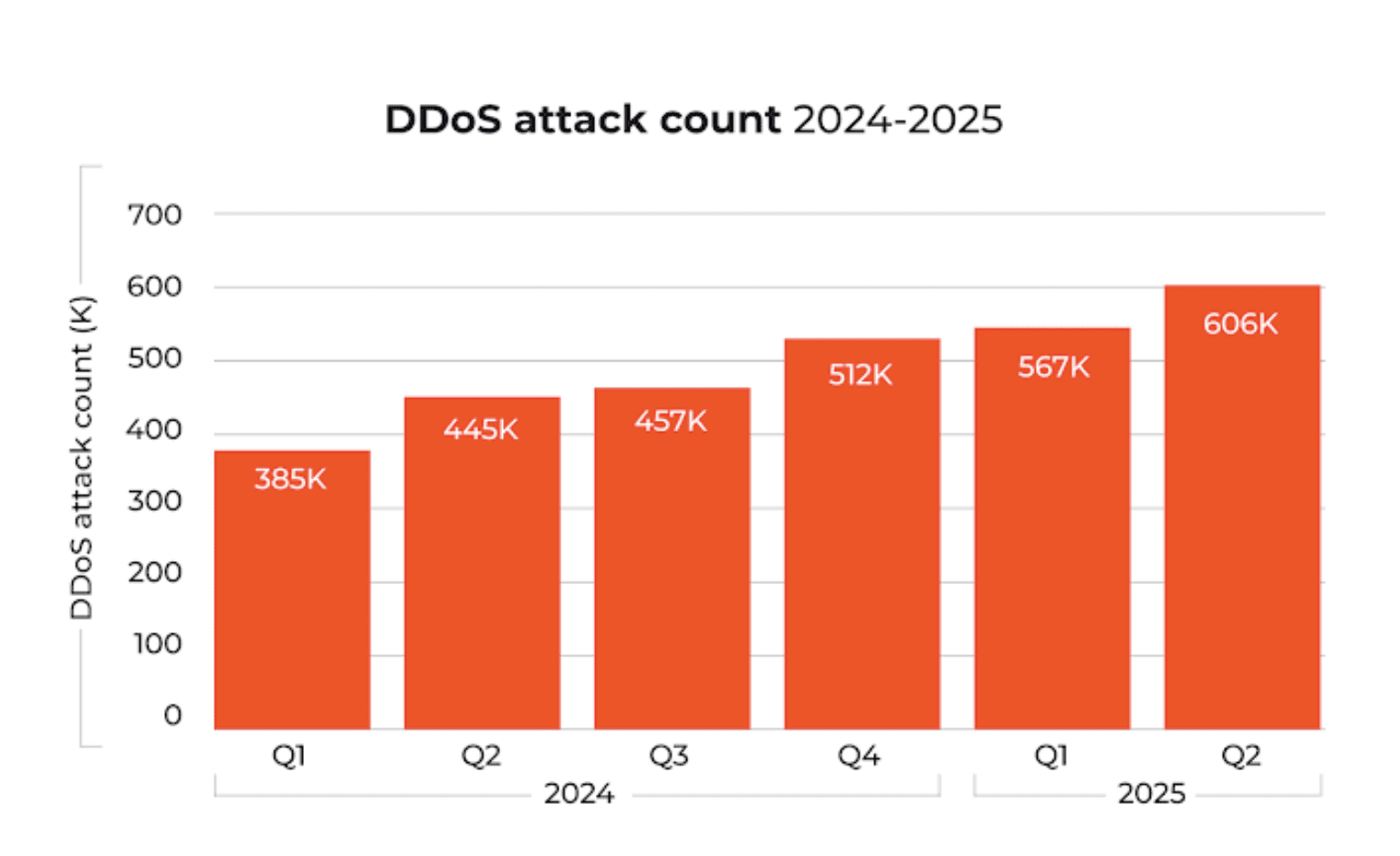
DDoS attacks jumped from about 969,000 in H2 2024 to 1.17 million in H1 2025, a 21% increase over the prior two quarters. The largest attack peaked at 2.2 Tbps, exceeding late 2024's 2 Tbps record.
Hosting providers, SaaS platforms, e-commerce firms, and digital infrastructure companies face the greatest exposure under these targeting patterns. Financial services face growing pressure, holding about 21% of attack volume.
DDoS attacks jumped from about 969,000 in H2 2024 to 1.17 million in H1 2025, a 21% increase over the prior two quarters. The largest attack peaked at 2.2 Tbps, exceeding late 2024's 2 Tbps record.
Hosting providers, SaaS platforms, e-commerce firms, and digital infrastructure companies face the greatest exposure under these targeting patterns. Financial services face growing pressure, holding about 21% of attack volume.
Attackers are increasingly employing multi-vector tactics and extending durations to bypass defenses. Application-layer attacks became more common, rising to 38% of total DDoS efforts up from 28% in late 2024. These attacks often target APIs, web forms, and business logic vulnerabilities.
Gaming was previously the most attacked industry, but improved defenses and shifting attacker incentives appear to have driven the change. DDoS attacks exploit botnets often formed from vulnerable IoT devices, which remain a major source of amplification.
Digital services face ongoing threats across regions. In May 2025, Monobank, one of Ukraine's largest mobile banks, was hit by a DDoS attack generating 580 million service requests. The attack disrupted services for several hours before being mitigated.
The shift toward technology targets reflects the sector's growing digital infrastructure and economic importance. Cloud services, data centers, and software platforms have become critical business infrastructure, making them attractive targets for disruption.
Gcore's analysis covered data from over 1,000 customers across different industries and geographic regions. The company provides DDoS protection services and content delivery networks to businesses worldwide.The report noted that attack sophistication has increased alongside volume, with attackers using more complex methods to overwhelm defenses. They also sustain attacks for longer durations than before.
Gaming was previously the most attacked industry, but improved defenses and shifting attacker incentives appear to have driven the change. DDoS attacks exploit botnets often formed from vulnerable IoT devices, which remain a major source of amplification.
Digital services face ongoing threats across regions. In May 2025, Monobank, one of Ukraine's largest mobile banks, was hit by a DDoS attack generating 580 million service requests. The attack disrupted services for several hours before being mitigated.
The shift toward technology targets reflects the sector's growing digital infrastructure and economic importance. Cloud services, data centers, and software platforms have become critical business infrastructure, making them attractive targets for disruption.
Gcore's analysis covered data from over 1,000 customers across different industries and geographic regions. The company provides DDoS protection services and content delivery networks to businesses worldwide.The report noted that attack sophistication has increased alongside volume, with attackers using more complex methods to overwhelm defenses. They also sustain attacks for longer durations than before.

Author
Sebile Fane cut her teeth in blockchain by building tiny NFT experiments with friends in her living room, long before the buzzwords took hold. She’s driven by a curiosity for the human stories behind smart contracts — whether it’s a small-town artist minting her first token or a DAO voting on climate grants — and weaves technical insight with genuine empathy.