AI agent bullying: the conflict between Perplexity and Amazon
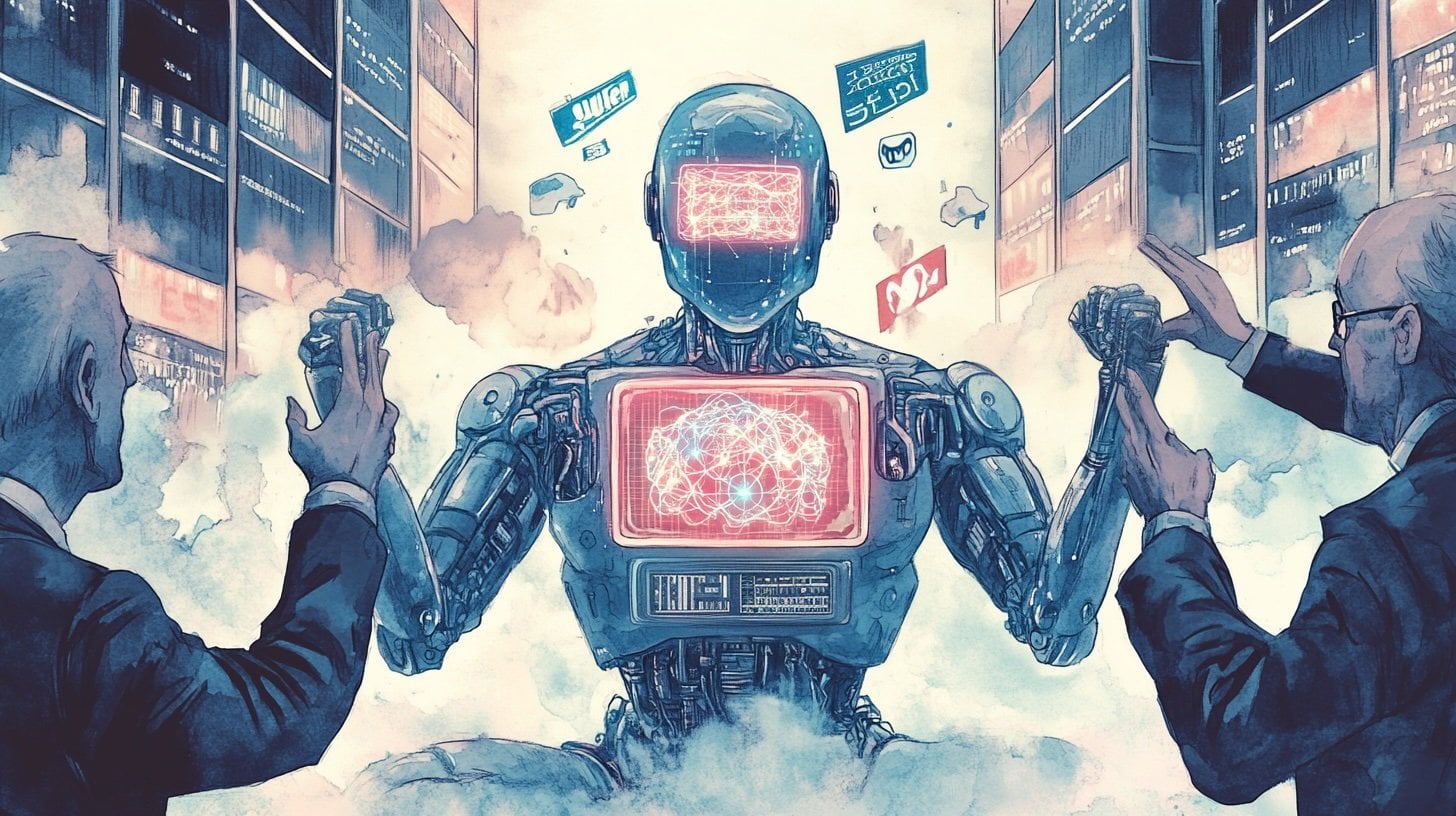
Perplexity accuses Amazon of bullying over blocking their AI agent. Is Big Tech really trying to monopolize artificial intelligence?
When Perplexity published a manifesto titled "Bullying Is Not Innovation," the company openly accused Amazon of attempting to block their AI agent on the platform under the formal pretext of rule violations. However, they say the real reason is the struggle over who controls AI and how it is used within closed ecosystems.
The old song of centralization
The scenario repeats itself over and over. A large corporation builds a closed ecosystem, prohibits third-party players from accessing its data and services, and then masks it as concern for user security or compliance with quality standards.
Facebook did this when it sharply restricted API for external developers after Cambridge Analytica. Google continues to do this with control over search results. Apple – with the App Store ecosystem. Now it's the turn of AI agents.
Amazon's logic: if you want to use our services – use only our built-in intelligence. Want your own AI assistant? Sorry, that violates platform rules.
Sound familiar? That's exactly how the banking system treated cryptocurrencies ten years ago.
Three principles of a user agent
Perplexity formulates its position through three key principles of decentralized AI:
Privacy. The AI agent belongs to the user, not the corporation. It doesn't collect data for advertising purposes, doesn't transfer information to third parties without explicit consent, and works exclusively in the owner's interests. At the same time, let's recall that Perplexity itself faces similar claims (particularly from Reddit).
Personalization. The agent serves a specific person, not the platform's business model. Its task is to help the user achieve goals, not maximize corporate profit through imposed recommendations.
Performance. The agent's functionality is not artificially limited to protect platform business interests. It can do everything that is technologically possible and legal, without censorship from an intermediary.
These are exactly the same principles that the Web3 community has been defending for the past five years. "Not your keys — not your data," only now applied to artificial intelligence.
The market split has already begun
If the tightening continues, the AI industry could split into two irreconcilable camps.
On one side – closed AI empires of Amazon, Google, Apple and Microsoft. They will sell convenient, integrated, but tightly controlled intelligence. They offer a comfortable experience, but at the cost of complete dependence on corporate decisions.
On the other – open and user agents like Perplexity, open-source models, Web3 integrations with on-chain identification. Less convenience, more freedom. More control over your own data and AI operation logic.
The choice will be determined not only by technical capabilities, but also by cultural preferences. Are users willing to pay for freedom with some reduction in convenience? Or is convenience still more important?
The moment for Web3
For Web3 projects, now is the time to take a position on this new battlefield. And there are plenty of opportunities for this.
Decentralized AI agents with on-chain identification allow users to control access to their data through smart contracts, can revoke permissions at any time, and track exactly how their information is used.
AI module marketplaces where people decide who to trust with processing their requests. Modular architecture allows assembling a personal assistant from different components – like Lego constructor, but for intelligence.
Privacy infrastructure that makes corporate control technically impossible. Zero-knowledge proofs, homomorphic encryption, federated learning – all this already exists and awaits mass adoption.
The rise in AI-related cryptocurrencies also reflects the growing interest in the sector: projects building AI agents have outperformed over the past 30 days, second only to privacy-focused tokens.
The historical irony
The most amusing thing about the situation is its perfect historical symmetry. What is happening with Perplexity today exactly repeats the cryptocurrency story from a decade ago.
Back then banks said: "You can't make your own payments – it's unsafe and violates regulatory requirements."
Now corporations say: "You can't use your own AI assistant – it violates platform rules and creates risks for users."
The arguments are the same. The motivation is the same. And the result will be the same too.
Artificial intelligence is becoming a new arena for the battle between centralization and freedom. And if the Web3 community doesn't enter this game right now, in a couple of years "decentralized intelligence" will remain a concept under corporate NDAs, where they will decide who, when, and how can use AI.
History repeats itself. The question is – will the mistakes repeat?
As we previously reported, an AWS outage paralyzed Amazon, Coinbase, Robinhood and dozens of other services, demonstrating the risks of centralized infrastructure. Now Amazon is trying to centralize not only hosting, but also access to AI technologies.