Japan urges China to lift rare-earth curbs
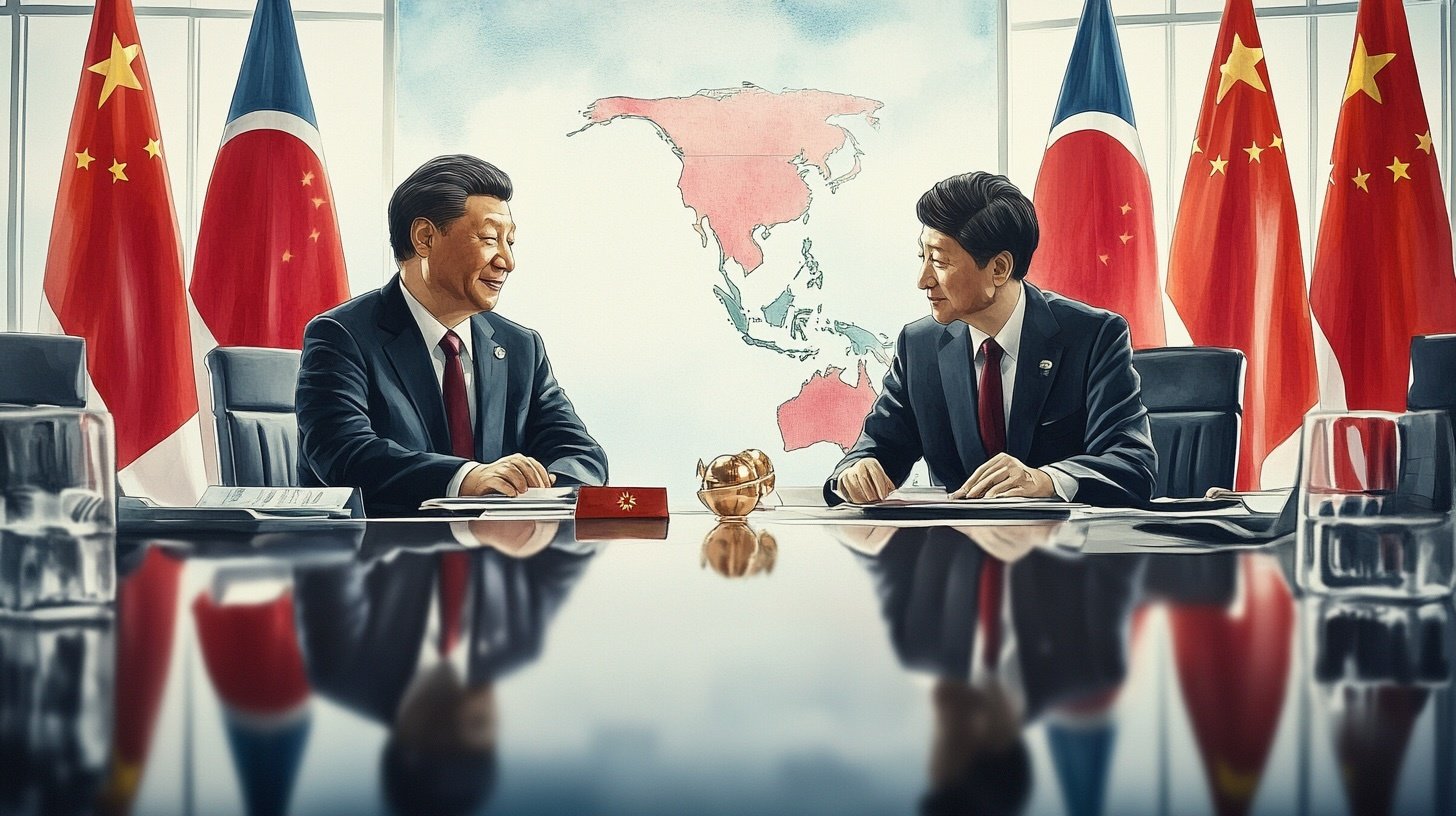
China’s President Xi Jinping and Japan’s Prime Minister Sanae Takaichi are negotiating on rare-earths security, a session that lands as Beijing expands licensing on critical elements and magnet technologies used in EVs and defense systems.
Japan is pushing for supply assurances and diversification after a week of policy and industry moves with U.S. backing. Earlier, Washington and Tokyo signed a framework to coordinate investment, stockpiling and processing outside China, with follow-on dialogues expected to map near-term financing and logistics.
Beijing’s export posture is the immediate backdrop. In April, China required special licenses for seven rare-earth elements and certain magnets, and in October it broadened controls to cover more materials, recycling equipment and outbound technology collaboration, with explicit restrictions tied to foreign defense and semiconductor uses.
Officials and trade trackers also flagged extraterritorial features - licenses may be needed for products made abroad if they contain Chinese-origin inputs or technologies - raising compliance risk along multi-country supply chains.
For Tokyo, the security case is twofold: heavy reliance on Chinese separation capacity and a domestic magnet sector that sits downstream of imported oxides. China accounts for the great majority of refined rare-earths and magnet output; the IEA’s latest read keeps China’s magnet share at dominant levels, underscoring how NdPr-based motors and Dy/Tb-doped grades remain chokepoints.
Beijing’s export posture is the immediate backdrop. In April, China required special licenses for seven rare-earth elements and certain magnets, and in October it broadened controls to cover more materials, recycling equipment and outbound technology collaboration, with explicit restrictions tied to foreign defense and semiconductor uses.
Officials and trade trackers also flagged extraterritorial features - licenses may be needed for products made abroad if they contain Chinese-origin inputs or technologies - raising compliance risk along multi-country supply chains.
For Tokyo, the security case is twofold: heavy reliance on Chinese separation capacity and a domestic magnet sector that sits downstream of imported oxides. China accounts for the great majority of refined rare-earths and magnet output; the IEA’s latest read keeps China’s magnet share at dominant levels, underscoring how NdPr-based motors and Dy/Tb-doped grades remain chokepoints.
Japan has moved to lock heavier elements too. JOGMEC and Iwatani joined France’s Caremag heavy REE project for dysprosium and terbium offtake from 2027, while Sojitz disclosed first imports of heavy rare earths from Lynas - material sourced from Australian ore and separated in Malaysia.
The trans-Pacific policy line aims at redundancy. A U.S.–Japan framework announced this week emphasizes financing and stockpiles within six months to reduce exposure to a single processor base, complementing the EU’s Critical Raw Materials Act that targets domestic capacity and allied sourcing across mining, separation, recycling and substitution.
Operationally, the categories in focus are tight and specific. Automakers and defense primes prize NdFeB magnets for torque density, but thermal stability in EV traction and guided munitions often depends on dysprosium and terbium - heavy REEs that are scarcer and more politically sensitive. China’s new licensing has already prompted case-by-case reviews and denials for defense end-uses, raising the odds of delivery slippage on specialized grades.
Europe and the U.S. are moving in parallel. Brussels’ CRM Act sets deployment targets for strategic materials capacity, and Washington has been negotiating allied deals and reviewing magnet imports under national-security authorities - steps meant to seed non-Chinese separation and magnet lines even if cost curves are higher at first.
On the industry side, Japanese and U.S. entities have announced fresh partnerships and exploratory offtakes across Australia and beyond, signaling a pivot to heavier-element security as much as headline NdPr.
Security matters will include Chinese naval and air activity near the Senkaku/Diaoyu islands and operations inside Japan’s exclusive economic zone. In June, China deployed two aircraft carriers into the Pacific for the first time, a development Tokyo flagged during diplomatic exchanges. Japanese officials also raised concerns about stability in the Taiwan Strait.
The trans-Pacific policy line aims at redundancy. A U.S.–Japan framework announced this week emphasizes financing and stockpiles within six months to reduce exposure to a single processor base, complementing the EU’s Critical Raw Materials Act that targets domestic capacity and allied sourcing across mining, separation, recycling and substitution.
Operationally, the categories in focus are tight and specific. Automakers and defense primes prize NdFeB magnets for torque density, but thermal stability in EV traction and guided munitions often depends on dysprosium and terbium - heavy REEs that are scarcer and more politically sensitive. China’s new licensing has already prompted case-by-case reviews and denials for defense end-uses, raising the odds of delivery slippage on specialized grades.
Europe and the U.S. are moving in parallel. Brussels’ CRM Act sets deployment targets for strategic materials capacity, and Washington has been negotiating allied deals and reviewing magnet imports under national-security authorities - steps meant to seed non-Chinese separation and magnet lines even if cost curves are higher at first.
On the industry side, Japanese and U.S. entities have announced fresh partnerships and exploratory offtakes across Australia and beyond, signaling a pivot to heavier-element security as much as headline NdPr.
Security matters will include Chinese naval and air activity near the Senkaku/Diaoyu islands and operations inside Japan’s exclusive economic zone. In June, China deployed two aircraft carriers into the Pacific for the first time, a development Tokyo flagged during diplomatic exchanges. Japanese officials also raised concerns about stability in the Taiwan Strait.

Author
Sebile Fane cut her teeth in blockchain by building tiny NFT experiments with friends in her living room, long before the buzzwords took hold. She’s driven by a curiosity for the human stories behind smart contracts — whether it’s a small-town artist minting her first token or a DAO voting on climate grants — and weaves technical insight with genuine empathy.