Indian IT sector slumps as U.S. introduces $100K H-1B visa fee

On Monday, September 22, shares of Indian technology companies fell after the U.S. announced a $100,000 fee on new applications for H-1B visas.
The White House said employers submitting new H-1B petitions to U.S. Citizenship and Immigration Services (USCIS) will now face a one-time fee of $100,000. The H-1B program is the main channel through which Indian IT outsourcers and developers send skilled workers to the U.S.
Until now, the cost of sponsoring an H-1B worker was significantly lower. Employers typically paid a $215 registration fee, a $780 application fee, a $1,500 education and training fee ($750 for companies with fewer than 25 employees), a $500 anti-fraud fee, and a $600 Asylum Program fee (waived for nonprofits).
Companies where more than half of U.S.-based staff were on H-1B visas also faced a $4,000 surcharge. In total, filing costs were under $8,000. The jump to $100,000 marks a more than tenfold increase, likely discouraging many employers from relocating workers
The market reacted swiftly, with all 10 stocks in the Nifty IT index sliding. Infosys, Tata Consultancy Services (TCS), HCLTech, and Wipro each lost about 2%. Persistent Systems took the biggest hit, falling by up to 4%.
The broader market was less affected. The Nifty 50 fell by about 0.05% to 25,316 points, and the BSE Sensex by 0.11% to 82,534.77 points. The Nifty IT index initially dropped by about 4%, but the decline narrowed to ~3% by mid-session. The Sensex and Nifty 50 benchmarks also closed in the red.
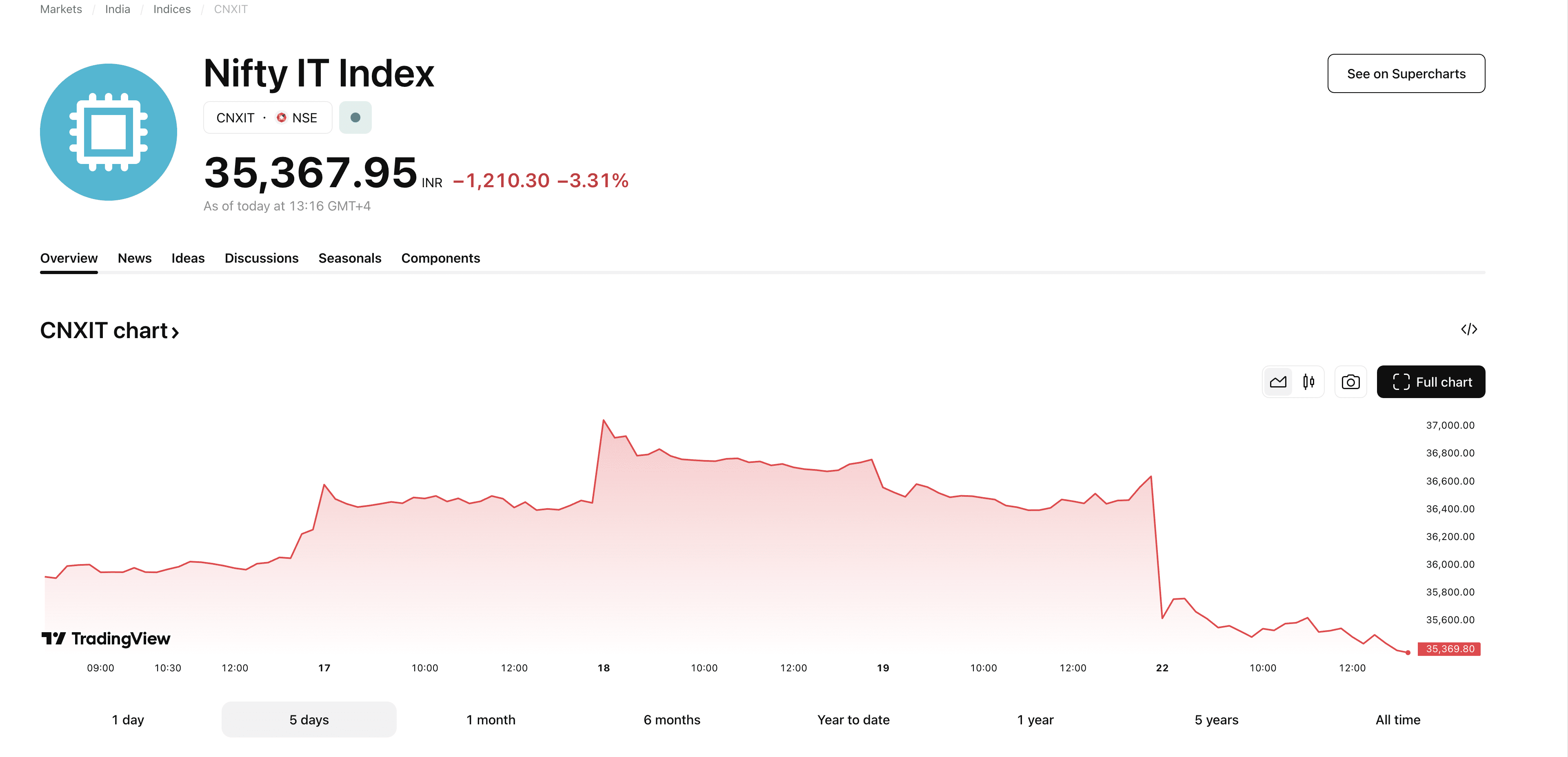
Price dynamics of Nifty IT. Source: Tradingview
The U.S. is the Indian IT sector’s largest market, accounting for about 57% of the industry's revenue. Higher visa costs could squeeze contractors’ margins and disrupt project timelines. Initial panic was driven by fears the fee might apply to existing visas, but the professional association Nasscom clarified it applies only to new applications. Approved H-1B holders are unaffected.
In recent years, about 70% of visa holders have been Indian citizens. Amid competition for engineering talent, Indian companies have historically been the most active users of this program.
The sector is already under strain from weaker client spending, longer sales cycles, and pressure from generative AI on traditional revenue models. Companies are now awaiting details on the timing and implementation of the new fee; until then, many are expected to accelerate local U.S. hiring and reassess relocation budgets.


Recommended