Why Dogecoin lags behind Bitcoin and Ethereum in 2025
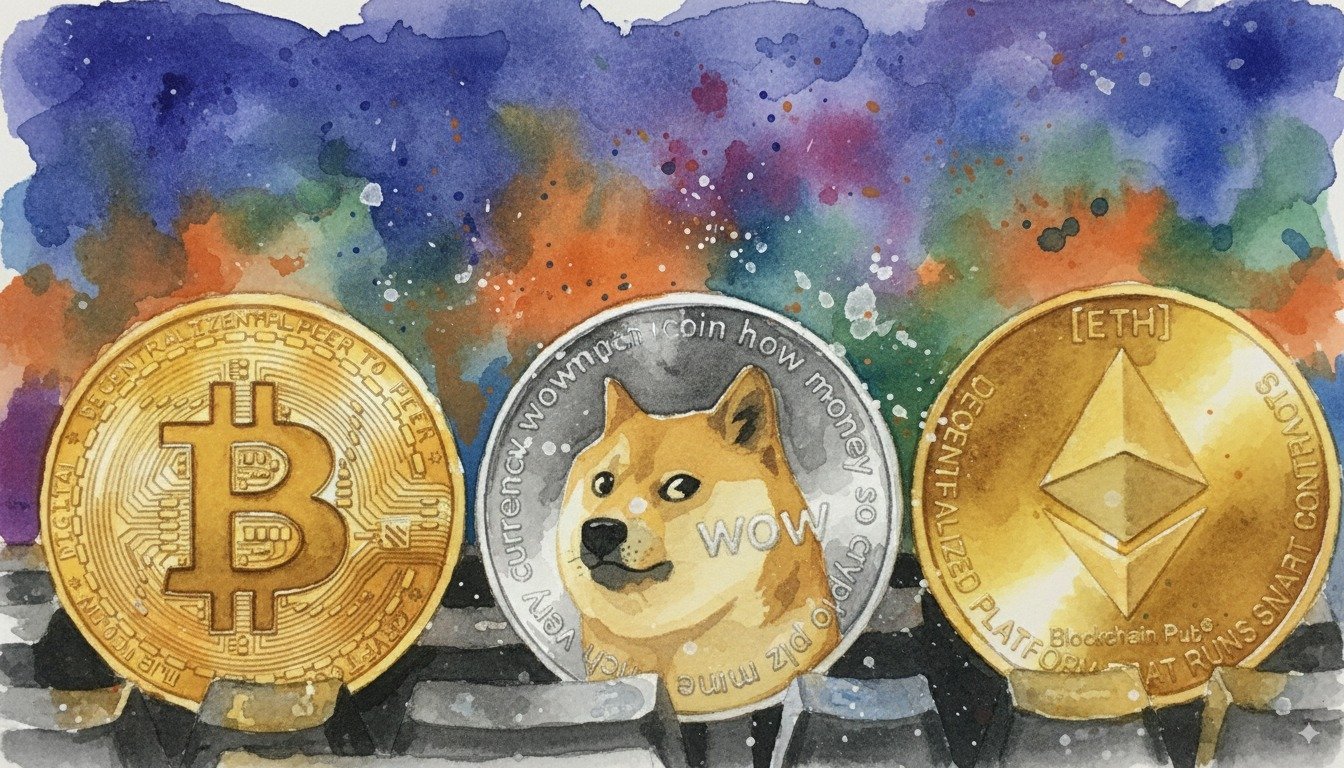
In 2025, the cryptocurrency market shows a growing divide between meme-driven tokens and assets backed by strong fundamentals. While Bitcoin has reinforced its status as “digital gold” and Ethereum has become the backbone of decentralized finance, Dogecoin continues to lag. GNCrypto is trying to understand what DOGE lacks to be considered as a top cryptocurrency.
Tale of three cryptos
The cryptocurrency market in 2025 highlights a widening gap between speculative assets and those backed by institutional adoption and real-world utility. Bitcoin (BTC) and Ethereum (ETH) have solidified their roles as the market’s foundation, while Dogecoin (DOGE) remains largely a meme-driven phenomenon.
Despite periodic price surges, Dogecoin continues to lag behind its peers. The reasons lie in its limited infrastructure, inflationary design, and reliance on retail hype- issues that Bitcoin and Ethereum have largely outgrown.
Bitcoin: digital gold standard
Bitcoin’s role as “digital gold” has only deepened. Institutional adoption remains strong, even amid volatility. In Q3 2025, U.S. spot Bitcoin ETFs absorbed billions in inflows but also saw $1.17 billion in outflows, showing investors’ shifting priorities.
At the same time, Bitcoin’s fundamentals remain robust. Its hash rate reached a record 675 EH/s, and the Lightning Network now supports 8.2 million users worldwide, reinforcing its position as a decentralized store of value and hedge against inflation.
Ethereum: utility powerhouse
Ethereum’s story is one of scale and innovation. Following the Dencun and Pectra upgrades, gas fees dropped by 90%, and Layer 2 networks now process up to 65,000 transactions per second. Total value locked in Ethereum-based DeFi platforms hit $240 billion by August 2025.
The network’s shift to Proof of Stake in 2022 continues to pay off, aligning Ethereum with regulatory frameworks and attracting institutional capital. In Q3 alone, Ethereum ETFs recorded $33 billion in inflows, and ETH’s ETF ratio against Bitcoin surged sixfold between May and July.
Ethereum has become the backbone of decentralized finance, Web3 applications, and global smart contract innovation, giving it a clear utility edge.
Dogecoin: popular but limited
Dogecoin, created as a joke in 2013, still runs on a proof-of-work system with an inflationary supply model, limiting its ability to hold long-term value. Its real-world use cases remain small - primarily tipping and microtransactions. Retailers like AMC Theatres and Newegg accept DOGE, but these applications pale in comparison to Ethereum’s DeFi footprint or Bitcoin’s institutional adoption.
Dogecoin’s volatility is amplified by whale dominance: nearly 31% of supply sits in large wallets, leaving retail investors exposed to sharp swings. While DOGE remains a top-three “most wanted” crypto among U.S. retail buyers, surveys show demand is driven by FOMO and social media hype, not fundamentals.
Plans for staking and Layer 2 scaling exist, but unlike Ethereum’s tested upgrades, Dogecoin’s roadmap remains largely speculative.Dogecoin, with no ETF presence and little institutional interest, remains disconnected from macroeconomic and regulatory trends.
Utility beats hype
The 2025 crypto market reinforces one lesson: utility beats hype. Bitcoin’s value lies in its role as a store of wealth, while Ethereum thrives as a programmable, scalable financial platform. Dogecoin, despite its loyal community and viral moments, remains a speculative outlier.As the market matures, investors are likely to reward assets with clear technological foundations and institutional backing - leaving meme-driven tokens like DOGE trailing behind.


Recommended