CS2 skin market recovers after historic $2B crash
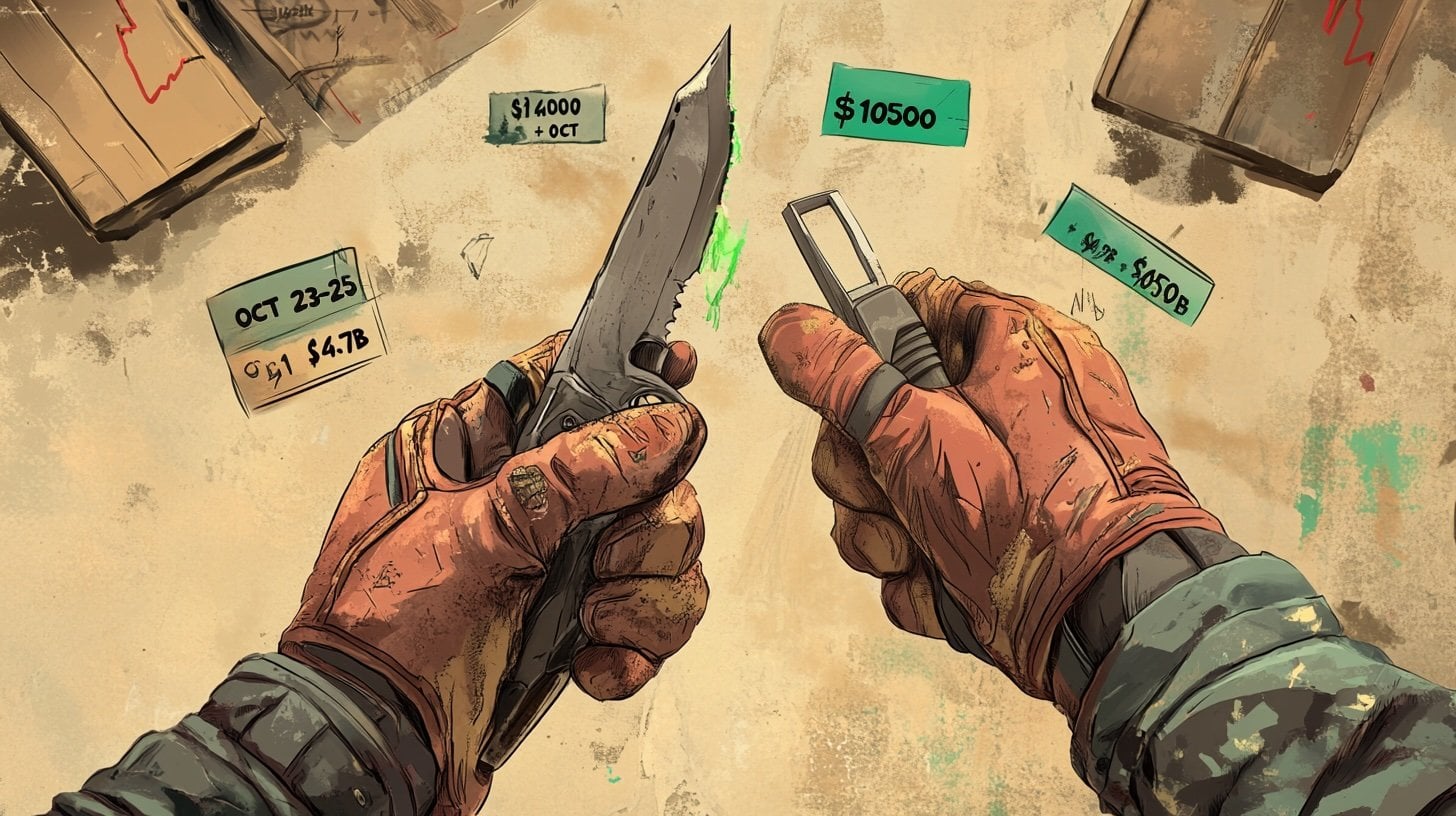
After losing $2 billion in market value following Valve's October 23 knife crafting update, the CS2 skin economy is showing remarkable resilience. Market capitalization has recovered from its $3.2B low to $4.7B, representing 75% of the pre-crash peak, as panic subsides and strategic buyers enter the market.
Valve's October 23 update introduced major changes to CS2’s virtual economy by allowing players to craft knives and gloves – previously the rarest and most valuable items – through the Trade Up Contract system. Five Covert (red) quality weapon skins can now be exchanged for a knife or gloves, instantly making these items widely available.
The immediate impact was catastrophic. High-value knives lost up to 70% of their value within hours, while Covert weapon skins – now essential crafting materials – exploded in price. The MP9 Starlight Protector Field-Tested jumped from under $5 to over $40.
Professional traders and collectors suffered massive losses. Football star Neymar Jr., who maintains a CS2 inventory valued at over $214,000, lost $50,000 in skin value overnight. Former pro player olofmeister saw his inventory drop from $58,000 to $18,000 – a 65% loss.
Recovery signals: four key indicators
1. Rapid 50% rebound in 24 hours
In just one day after hitting bottom, skin values surged 50% from the absolute low. This V-shaped recovery indicates that traders saw the crash as panic-driven rather than reflecting true value loss.
2. Record case opening activity
October case openings exceeded 31 million, with half of this volume occurring in just three days following the update. This massive surge indicates players are actively engaging with the new crafting mechanics rather than abandoning the market.
The spike in case openings benefits Valve directly through key sales, and highlights an anti-cyclical effect – when traders lose money, player activity and Valve's revenue actually increase.
3. Buyers entering at discount prices
Professional traders predicted the crash shouldn't have been this severe, blaming panic selling for affecting the entire market instead of only knives and gloves. After the dust settled, prices became low enough that many items appeared worth the risk of buying.
This established a natural price floor as knives became attractive to players who previously couldn’t afford them.
4. Supply analysis shows limited long-term impact
Despite fears of market flooding, FloatDB analysis indicates that even if every eligible skin underwent trade-up conversion – an improbable scenario – knife supply would only increase from 5.5 million to 11 million units.
Former YouTube gaming head Ryan Wyatt identified confidence as the primary issue rather than supply concerns, suggesting the psychological impact exceeded the actual supply disruption.
The CEO of the White.Market marketplace, in an exclusive interview with GNcrypto, stated that the incident will only benefit the entire market, and players who have long dreamed of obtaining expensive knives will realize their dream sooner.
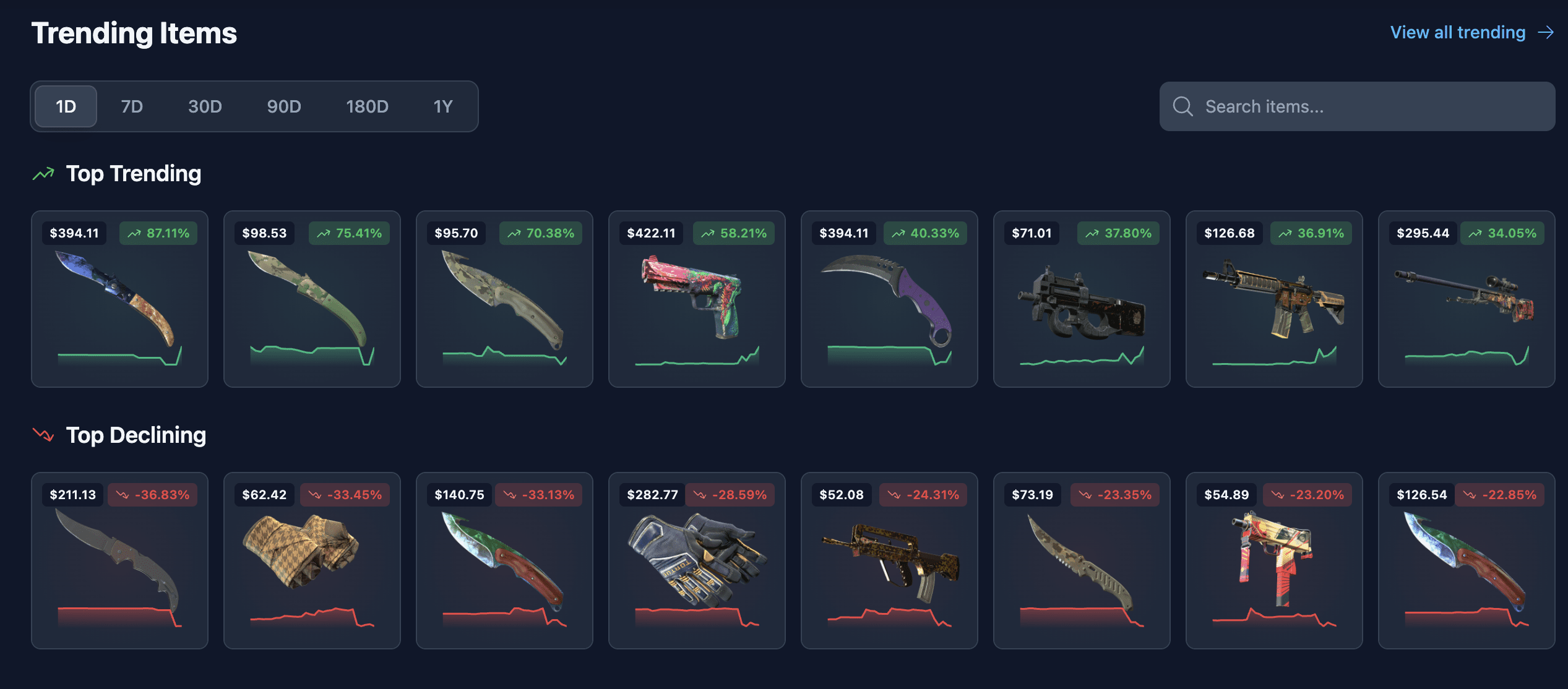
The CS2 skin market is seeing a recovery - Source: Price Empire.
Winners and losers
The update didn't destroy value uniformly – it redistributed it.
Losers: High-end knife collectors and investors holding premium items like Butterfly Knives, Karambits, and rare gloves. These items are unlikely to return to pre-update prices due to increased accessibility.
Winners: Regular players who can now afford knives through crafting, and traders who accumulated Covert skins before or immediately after the crash. Some reds increased 10-20x in value as crafting demand exploded.
The market has split into two tiers: top-tier rare patterns and StatTrak items retain premium status, while standard knives have become "mid-tier" items accessible to a much larger player base.
What's next?
Market analysts suggest the recovery will continue but slow as crafting activity normalizes. Professional traders noted that prices have stabilized enough that affected items are now worth the risk of buying.
However, uncertainty remains. Valve has not commented on whether the update was intentional market correction or if further changes are planned. Some industry observers speculate the move was designed to deflate what Valve perceived as an unsustainable speculative bubble.
Multiple traders announced permanent exits from the market, and community forums continue debating whether CS2 skins can still be considered "investment assets" when developers can introduce major changes to their value overnight.
Is a second wave of selling possible?
Forbes warns that the recovery may face a new test this week. The seven-day trade cooldown on items sold through external platforms during the initial crash expires on October 30.
Many players purchased rare knives and gloves at crashed prices, then immediately transferred them to external sites to convert holdings into real money rather than Steam credit. These items were locked by a seven-day trade cooldown, preventing immediate resale. As these restrictions lift, a significant volume of previously unavailable inventory will enter the market.
Trading forum consensus suggests this could trigger a second price drop as holders who bought during the panic attempt to liquidate positions. A counterbalancing factor may be that many traders are preparing to buy during this anticipated dip, potentially creating demand sufficient to absorb the additional supply and stabilize or even lift prices.
The next few days will prove critical in determining whether the current recovery holds or gives way to renewed selling pressure.
The new reality
The CS2 market crash and recovery reveals something fundamental about virtual economies: they're extraordinarily volatile yet surprisingly resilient. Valve demonstrated they control the rules, but the community proved it still values these digital items even after a historic devaluation.
Digital scarcity in gaming exists controlled by developers. Unlike physical collectibles or blockchain assets, CS2 skins can be fundamentally revalued by a single patch. Yet the $4.7 billion market capitalization suggests traders haven't abandoned ship – they've simply recalibrated expectations.
The panic selling amplified the crash far beyond what supply increase warranted, creating opportunities for those who kept calm. And now, a new equilibrium is forming: knives have shifted from ultra-rare investments to accessible luxury items, while Covert skins have become the new scarcity bottleneck.
Whether this recovery continues or represents temporary relief before further decline depends on Valve's next moves and whether trader confidence fully stabilizes. For now, the data suggests Counter-Strike's virtual economy is adapting rather than collapsing – volatile, unpredictable, but far from dead.


Recommended