Rare-earth export reach widens, AI and crypto infra face costs
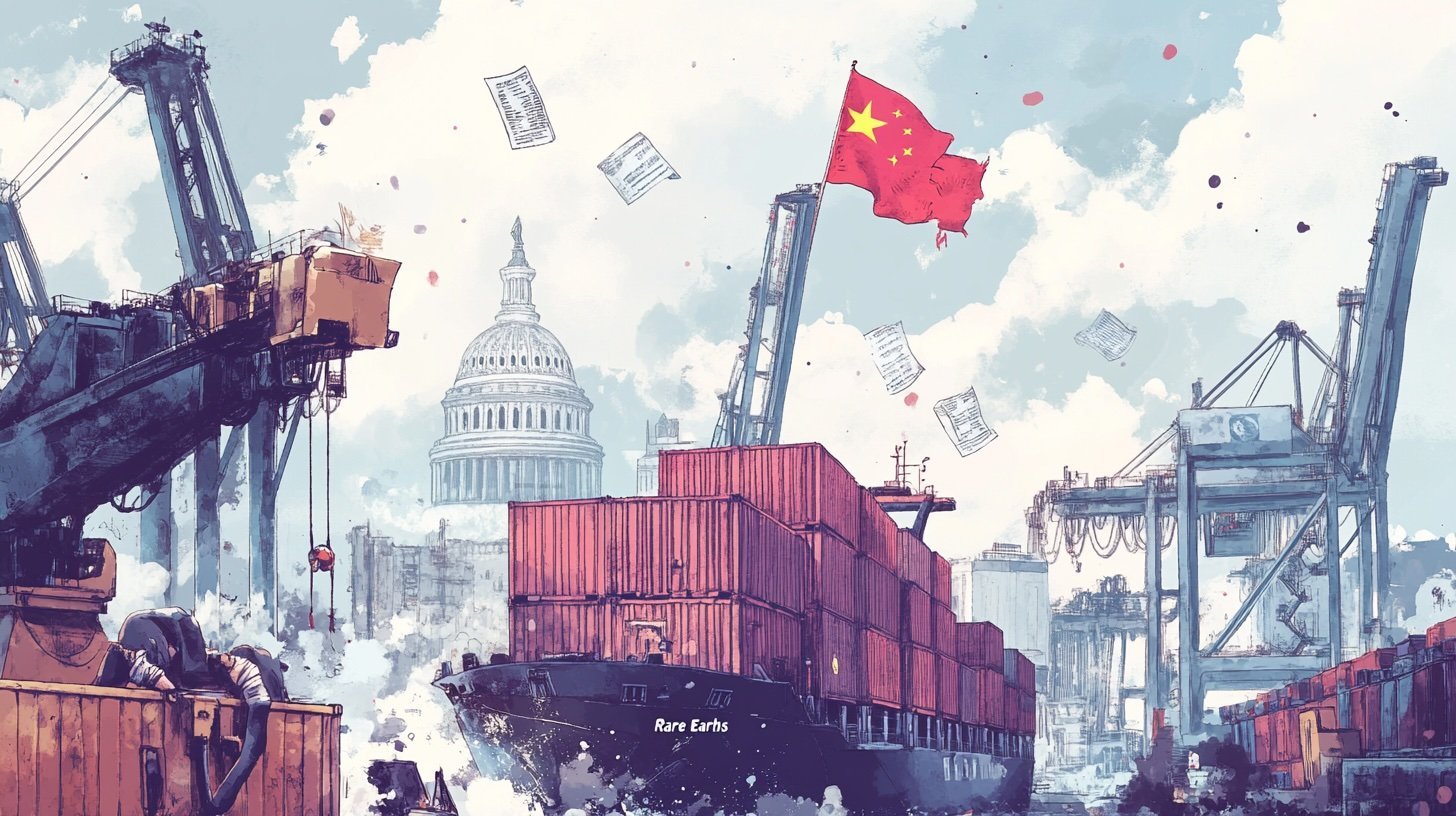
China is extending its rare‑earths grip beyond its borders. New rules require even foreign exporters to seek Chinese permits if goods contain traces of Chinese rare earths or magnets, with more measures due Nov. 8, 2025. Allies are coordinating a response.
Beijing’s playbook now mirrors the U.S. long‑arm approach used in chip controls: export licenses, entity lists and sanctions‑style reach. This turn dominated meetings in Washington, where U.S. officials said they are speaking with Europe, Australia, Canada, India and Asian democracies on a joint answer. Japan urged G7 countries to “unite and respond,” while Germany floated a coordinated EU line. Analysts warn that overreach could backfire by pushing partners to accelerate diversification away from Chinese inputs and equipment.
Two views of scope emerged. Chinese academics argue compliant partners won’t be targeted. U.S. trade officials counter that the curbs could touch everything from AI systems to household appliances – “it covers the whole world,” one said – given how widely rare‑earth materials and tooling are embedded in supply chains.
For crypto teams, the squeeze lands in the racks, not the tokens. When magnets, motors and power gear get pricier, servers and GPUs follow. Those costs roll through zk‑prover clusters, L2 validator fleets and AI×crypto services – agentic checkouts and on‑chain AI – where compute and cooling already swallow most of the budget.
Bitcoin mining feels it indirectly. ASIC fabrication sits outside these controls, but surrounding infrastructure – cooling, power electronics, logistics – could get pricier or slower to source, especially if licensing adds friction around magnet‑heavy components.
Investment angle: allied diversification is in motion. Expect renewed focus on non‑China rare‑earth miners and processors (e.g., Australia/U.S.), plus stronger demand for on‑chain supply tracking and offtake tokenization as buyers seek provenance and pre‑finance new capacity.
Historically, WTO pressure led China to drop rare‑earth quotas in 2015. This time, the architecture is broader and more extraterritorial. Whether enforcement is blanket or selective may decide how quickly costs filter into AI and crypto infrastructure.
From here, two paths are in play. A coordinated G7 framework could carve exemptions and fast‑track non‑China supply, limiting price shocks. Or Beijing could selectively enforce permits to pressure partners, prolonging uncertainty. Either way, teams relying on heavy compute should stress‑test budgets and timelines against supply‑chain delays tied to Nov. 8 rules coming online.