How Bitcoin ETFs threaten Michael Saylor's cash machine

Beyond Bitcoin’s decline, Strategy (formerly MicroStrategy) stock pressure challenges from ETFs and corporate treasuries that erode its appeal.
Changing market conditions put the business model of Michael Saylor's Strategy under scrutiny. Currently, Strategy shares trade at a premium, meaning their market value exceeds the Bitcoin holdings the company owns. However, competition among Bitcoin treasury companies is growing, alongside the rising popularity of Bitcoin ETFs (exchange-traded funds).
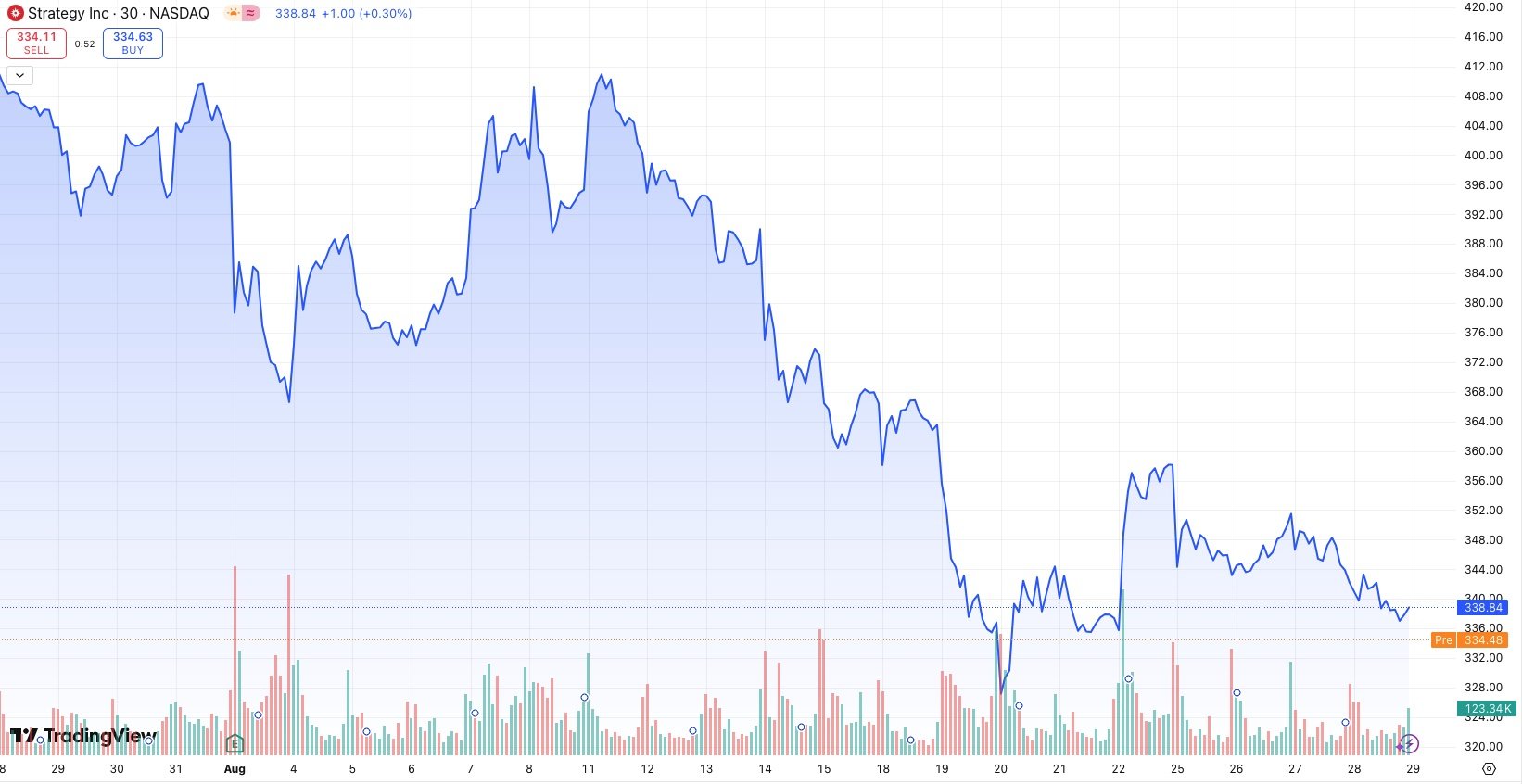
MSTR Performance
Strategy is the world’s largest corporate holder of Bitcoin. Although founded in 1989 as a business analytics software company, it has gained popularity in recent years for its aggressive Bitcoin accumulation strategy since 2020. At the time of writing, Strategy holds 636,505 Bitcoins, valued at over $69.5 billion. In December 2024, the company’s stock, MSTR, was included in the Nasdaq-100 due to strong performance. MSTR uses its stock and debt to acquire more Bitcoin, creating leveraged exposure to Bitcoin's price movements. Amid the market decline at the end of August 2025, MSTR fell as well. The stock is down 16% over the past month, currently trading at $338.
MSTR performance from July 28 to August 28, 2025. Source: TradingView
MSTR still trades at premium, with a market NAV ratio (mNAV) of 1.59, meaning investors are paying about 59% more than the value of its Bitcoin holdings. Over the last year, MSTR posted 157% gains, and the premium reflects investor support for Strategy’s Bitcoin strategy. The stock has seen demand as an alternative way to gain Bitcoin exposure. Unlike buying Bitcoin directly, investing in MSTR provides exposure through a corporate vehicle. However, Bitcoin spot ETFs, which offer direct exposure to Bitcoin, and other investment options may look more attractive, potentially reducing demand for MSTR.
Will Strategy’s premium end?
Bloomberg reports that Strategy’s mNAV premium has been shrinking since 2020. While the stock has often traded above the value of its Bitcoin holdings, this is no longer guaranteed. The premium depends on market sentiment, confidence in Strategy’s long-term plan, and Bitcoin’s performance. A big drop in Bitcoin or shifts in market conditions could quickly reduce investor interest and put the premium at risk.
The decreasing premium is a natural reaction to competition and alternative ways for traders to gain exposure to digital assets. Additionally, walking back guidance around no share issuance under 2.5x mNAV has forced short-term reassessments of the corporate strategysaid Jake Ostrovskis, principal analyst on Wintermute’s OTC Desk.
The early-mover advantage that MSTR once enjoyed as the main way for investors to gain Bitcoin exposure through a traditional brokerage account is diminishing. This could lead to the end of MSTR’s premium trading. In pessimistic scenarios, Saylor’s Bitcoin strategy could fail completely. However, the company’s active treasury and debt management may help it maintain a strong market position.

Author
Web3 writer and crypto HODLer with a keen interest in market trends and recent technologies.


Recommended