Aave DAO proposes $50M yearly AAVE buyback

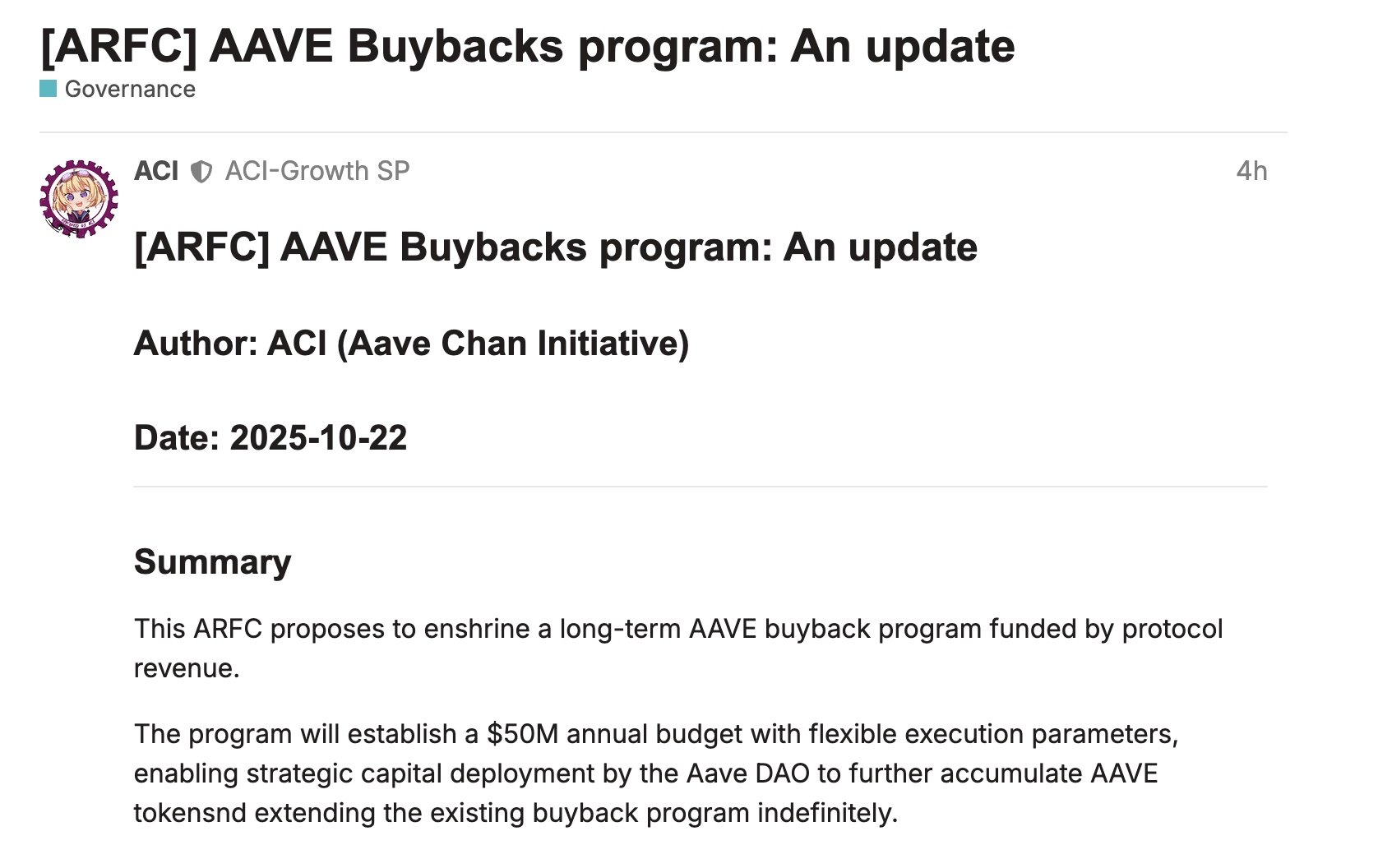
Aave DAO has submitted a proposal to establish a $50 million annual program to buy back AAVE tokens using protocol fee revenue.
The plan, filed by the Aave Chan Initiative, would have TokenLogic and the Aave Finance Committee carry out weekly purchases ranging from $250,000 to $1.75 million. The AFC could change weekly volumes within a 75% adjustment window based on market conditions, token volatility, timing and available revenue.
The proposal gives the AFC authority to deploy wBTC and wETH reserves to fund growth initiatives. Permitted uses include creating credit lines on Aave codebases, converting reserves into yield-bearing assets and using collateralized debt to finance activities. Leveraged positions would be required to maintain a minimum health factor of 2, and the AFC could use unstaked wETH from existing programs as collateral.
The proposal gives the AFC authority to deploy wBTC and wETH reserves to fund growth initiatives. Permitted uses include creating credit lines on Aave codebases, converting reserves into yield-bearing assets and using collateralized debt to finance activities. Leveraged positions would be required to maintain a minimum health factor of 2, and the AFC could use unstaked wETH from existing programs as collateral.
If the ARFC receives community feedback in favor, the proposal will move to an ARFC snapshot vote. A successful snapshot would trigger a formal AIP vote to approve the program. The Aave Chan Initiative disclosed it did not receive compensation for drafting the proposal.
The proposal states: "With the expiry of the existing buyback initiative, and the strong success of the program, we think it is an opportune time to enshrine a buyback program to further enhance Aavenomics."
Aave is a decentralized lending protocol that issues AAVE tokens, provides lending and borrowing services and has expanded into tokenized real-world assets and additional blockchains.
The protocol generates fee revenue from its lending markets and other services. The proposal follows a pattern in decentralized finance of using protocol fees to buy back native tokens and manage treasury capital.

Author
Has been exploring the enigmas of the crypto industry since 2017, transforming them into accessible narratives. Relies on dark chocolate and nuts as a secret source of energy and inspiration.


Recommended